
Goodtrepreneur is the podcast about good people with good ideas for a better world.
The world needs more good ideas. Ones that are good for planet, people and the idea’s creators too.
Goodtrepreneur speaks to the good people having a go at making these ideas happen. It explores ways that creativity and innovation are being applied to social and environmental causes, and why some ‘good ideas’ succeed and some do not.
Read the whole story below👇 or click here skip to the Q&A 👉
Hello, my name is Ben.
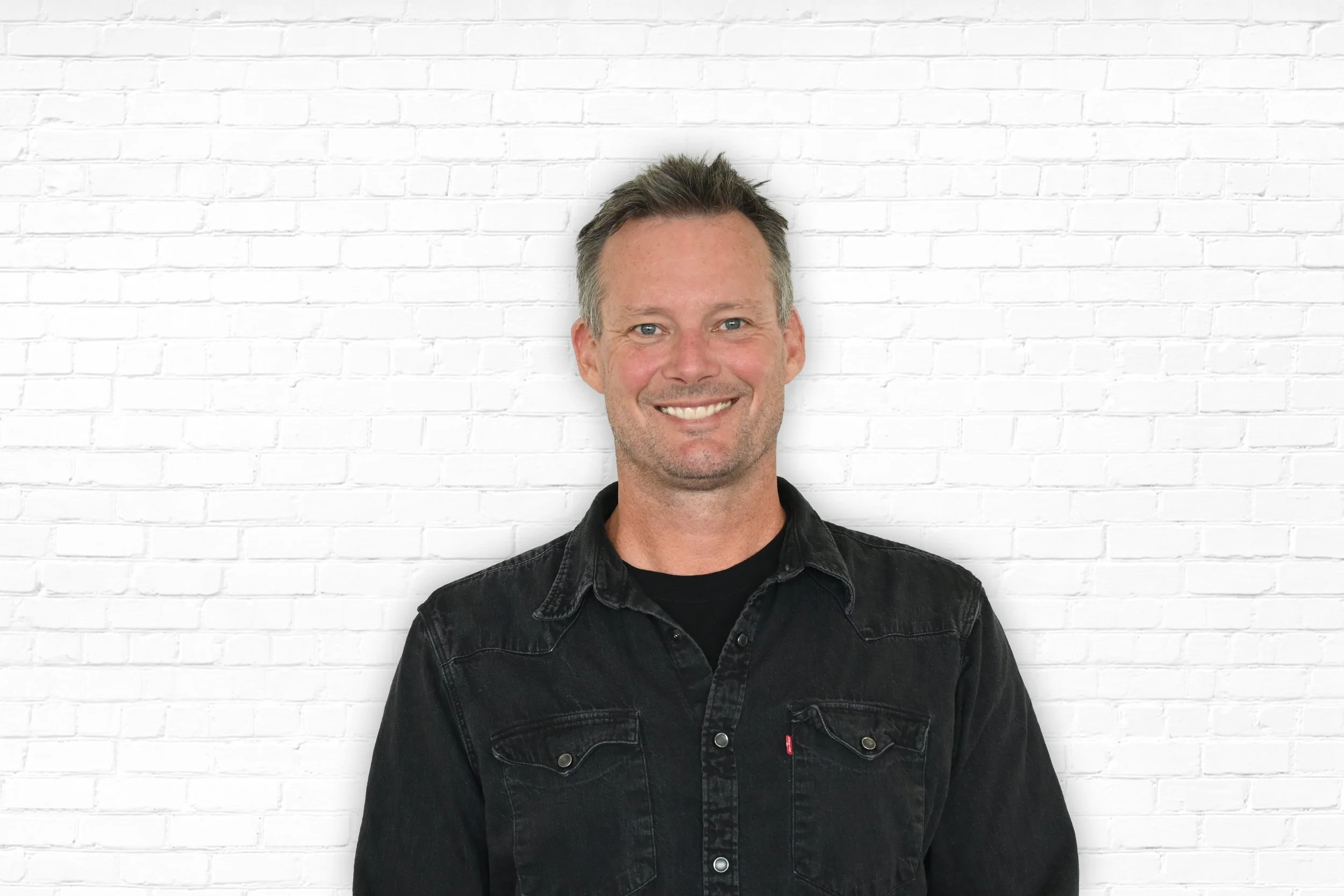
I’ve been working on environmental and social causes for almost 20 years, mostly as Founder of one of the world’s first impact agencies, Republic of Everyone.
As you can imagine, it’s hard work. Even with the rise of sustainability in the past decade people and planet are more often than not an afterthought in an economy that is fundamentally about making as much money as possible as fast as possible, with little consideration for the long-term impacts.
That’s not say people aren’t interested, or indeed trying.
I don’t think I’ve ever met a person who wanted to destroy the world’s wild places, put plastic in our oceans or pollute our air. And almost everyone agrees with the idea of a fair go. The challenge is, life gets in the way, short-term urgency gets prioritised over long-term needs and the problems persist, getting bigger and bigger while we get on with our everyday.
It can’t go on like this.
You don’t have to Google far to find out that climate change is now upon us and that issues like deforestation and inequality are acute. If you want to know the extent of the problem, here are three stats that always stick in my mind:
Every one of the last 11 years is one of the 11 warmest on record (WMO, 2026)
Global wildlife populations have fallen over 70% in just 50 years (WWF, 2024)
The world's 26 richest people own as much as poorest 50% (Oxfam, 2019)
I choose these three because I believe that, as a set of issues, they are the most urgent.
Climate change because it is changing the planetary systems we rely on to live, deforestation because it destroying the nature we are a part of and inequality because the spoils of this destruction are so crazy badly distributed that the vast majority of humanity doesn’t even benefit from all the damage.
I could of course go on about plastic pollution, overfishing and so on, but that would be kind of depressing. And while stats like these are the backdrop for why I thought this podcast might be a good idea, they are not what it’s about.
It’s about finding answers.
As I was saying, I genuinely believe most people want to find answers. But like you and me they are stuck in a system of going to work, going home, paying the bills and doing it all over again.
So much for Eat. Sleep. Rave. Repeat. More like Spreadsheet. Can’t Sleep. Slave. Repeat.
The good news is there are plenty of good people with good ideas having a go. And we need them to succeed more than ever. Why? Let me count the ways…
They make ‘impossible’ possible
Old problems need new ideas. Or, as my friend Lucy likes to say, if nothing changes, nothing changes.
Goodtrepreneurs are in the change game in a way that existing organisation generally are not. I’m not saying good ideas can’t come from existing companies, they can and do. The motivations and appetite for change - as well as determination to find a way - are just different.
Let’s say the company you work for makes a billion plastic widgets a year and your big idea is to make them out of recycled plastic. Sounds easy, right? But of course, it’s not. Chances are the supply chain just does not exist. No one is collecting old plastic (and if they are it’s the wrong sort), no one is sorting it and melting it down into usable material and, even if they are, everyone is pretty nervous about putting this new material into the million dollar machine that turns plastic into widgets. Then, even if you get past all those hurdles, you’ll likely find that this new supply costs more than the old one which simple sucked dinosaur juice out of the ground and refined it into cheap polymers. And no one is prepared to foot that bill, or take the risk or ruining what is currently a successful, profitable business.
So your big idea goes in the too hard basket and the problem lives on.
All of of which is a way of saying that, whether people are motivated or not, often change is hard in a big organisation where systems and processes have been set over years and there’s money being made by doing things the same way they’ve always been done.
Innovators think differently. They are unchained by precedent and able to test things small then scale up big. It is the role of the entrepreneur to challenge existing business wisdom and, in doing so pioneer new supply chains and business models. They’re not for evolutionary change, they’re looking for revolutionary change on which to build a new and better way in an old market.
They are the revolutionaries of the business world, shaking the status quo and showing a better way is possible.
So when the world of innovation and entrepreneurs turns its attention to revolutionising business in ways that is better for people and planet, change becomes possible at a whole new speed and on a whole new level.
They force change bigger than themselves.
You can’t talk about this stuff without talking about Patagonia. Whether it’s through innovation in materials, retooling of supply chains, breaking new ground in how activism is done or rethinking the entire business ownership model to be for the better of our home planet, Patagonia quite simply sets the standard.
But here’s the rub.
For all its awesomeness, Patagonia is only around a US$1 billion company. Yes, I agree, that’s a fat pile of money, but when you consider that Unilever is a US$106 billion dollar company, Netflix is worth almost US$400 billion and Apple is valued at over US$3.6 trillion (3,600x bigger than Patagonia), you see the challenge.
If the biggest business success story in sustainable innovation is fundamentally a rounding error in the bigger scheme of global business then it can be easy to come to the conclusion that that the hype is bigger than the impact. But that would be to miss the point completely.
See, thanks to Patagonia, pretty much every outdoor apparel brand now has a social and environmental impact story to tell. And to tell a story you have do something worth talking about.
Whether North Face, Arc'teryx, Columbia, Salomon, Helly Hansen or almost any other brand you care to name, social and environmental impact is now core to category. And it doesn’t stop there. Retail apparel more broadly (that’s ‘clothes and shoes’ in everyday language) is one of the most watched and considered categories when it comes to sustainability. You can even look up a brand before you buy it thanks to directories like Good on You.
Would all this have happened without Patagonia? Maybe. Have their efforts to bring issues and answers to the spotlight sped things up? Undoubtedly. So now we’re not talking about the impact of a US$1 billion company, we’re talking about the flow on effect on a US$2 trillion industry, and the bigger world beyond that. And that’s a whole lot of ripple effect.
They create choices you and I can choose everyday
Good ideas give everyday people like you and me a way to vote for the world we want many times a day, every single day.
Every coffee you enjoy, every loaf of bread you butter. Every kWh of electricity you burn, every t-shirt you wear and every km you travel in it contributes to a version of the future we and our children will live in. So, if we want the future we want, we need the choices available to us - and that’s what these good entrepreneurs, or Goodtrepreneurs, create.
And that means we need more of them, and more of them to succeed more often.
Which brings me to the answer to the question, what is this podcast all about? (Yes, I know, finally right?).
Simply put, it’s about finding out what makes a good idea good. Why some succeed and some fail. How innovators innovate supply chains, how people draw other people to their good idea and the unique business models they use to fuel their purpose with profit and make their organisations financially sustainable so they may grow and do more good by doing so.
It explores the personal too, asking why people are drawn to the cause they are drawn to, how the deal with the ups and downs and what they do to maintain their own personal sustainability.
I figure that if the lessons learned from success and from failure are easier to find and learn then more people might just be inspired to have a go and be more likely to succeed. And if more everyday folk like you and me understand the effort people go to to bring us these good ideas and products, then maybe we will be more likely to give them a go and support them to succeed.
So that’s the idea.
The podcast is the first part of it. Over time, I hope to find common threads which can be bundled into a how-to-succeed playbook. But that’s in the future.
For now, please enjoy the stories of good people with good ideas for a better world. And tell me if you know someone whose story I should tell.
Because the more good stories we tell, the more good ideas will come and the better our chance of building the better world we’d all like to live in.
Q&A
What is this podcast?
Goodtrepreneur is the podcast about good people with good ideas for a better world.
In it we explore ways that creativity and innovation are being applied to social and environmental causes, and why some ‘good ideas’ succeed, and some do not.
Guests include the creators of brands, nonprofits, communities and more whose core purpose is to help solve an environmental or social problem. It’s innovation for a sustainable, regenerative world.
We believe that if nothing changes, nothing changes, so we need more people coming up with more good ideas to solve the social and environment challenges of our times.
Goodtrepreneur is a must-listen for anyone thinking of starting a purpose-led organisation or simply wanting to enjoy some good news in the world of world-changing ideas.
Who are the guests?
People from business, nonprofit, government and academia who have:
founded a purpose-driven company
pioneered a product with clear social or environmental benefit - within or outside of their day job
made a movement that brings people together to clean up a river, green our cities or any other social or environmental cause
started a nonprofit with difference
created an idea or concept that has changed how we think about the importance of community and environment within our economy and society
We are interested in both stories of success and failure. The way we see it, if you had a good idea that ultimately did not work - either by not creating the impact you expected, or by struggling to be financially viable - then there is as much, if not more, to be learned from your story than from one of success. And, given that we are all here to solve very difficult challenges, those who have a go and help the rest of us learn are to be celebrated and applauded.
Who is the audience?
Anyone who has ever had an idea (or half an idea) in this space but didn’t have the confidence or know-how to have a go at making it happen. By hearing from others like them who have put an idea into action, we hope to give them the practical help they need to get their good idea off the ground.
Listeners also include people who have an interest in social and environmental causes and want to dive deeper into the world of good products, movements and nonprofits they can support or get involved in. By telling the story of how these ideas came to be - and how hard the journey can be - it is hoped that we will inspire more everyday people to support them and, by doing so, grow their impact.
I’m a Goodtrepreneur. Why should I be involved?
If the world is to solve the big challenges like climate change, deforestation, ocean pollution and inequality, we need more people with more ideas having a go more often.
As one of the few people who have had a go, telling your story can inspire more people to do so too. So, there is strong do-good element to getting involved. But there’s plenty in it for you too.
Being involved will help you as a person grow your audience, and your product or organisation reach more people. It will also help grow the industry and ecosystem for good ideas, which will ultimately benefit you by making it easier to get these ideas to be scaleable and financially sustainable.
What questions do you ask?
Each episode follows a roughly similar flow. It begins with a quick introduction to you, your idea and its impact so far. We do this to hook the listener by giving them a preview of what they are about to hear and why this is worth their time. From their, we deep dive your idea and the story behind it (so far), with questions such as:
What is the problem you are seeking to solve (eg: ocean plastics)?
Why is it a problem and how big is it?
What is your good idea to solve it?
How did you come up with it?
How has it gone so far - tell us about the impact?
What has the journey been like to get to where you are?
What have been the hardest and easiest parts?
How have you created adoption - drawing people to your cause, product or idea?
Tell us about the money. How do you manage to stay financially sustainable when impact is the ultimate goal?
How do you stay positive and maintain your own personal sustainability?
Who is the host?
Ben Peacock is the creator and host of Goodtrepreneur.
Ben is an impact strategist and storyteller with almost 20 years experience working on social and environmental causes. He is founder of Australia’s OG sustainability agency, Republic of Everyone, co-founder of the multi-award winning Garage Sale Trail and creator or co-creator of hundreds of ideas, campaigns and movements to create a better world.
You can learn more about him here or on LinkedIn.
Any other questions?
Please email ben@goodtrepreneur.co


Get every episode in your inbox
Join the mailing list. No spam, no selling, just the latest episodes and hot tips from the world’s Goodtrepreneurs. Pinky promise.