
'I'd Be a Bum if I Said No'. Dave Gibson on how Hawke's Brewing went from a crazy idea to Australia's nature-helping beer.
👂 Listen on Apple Podcasts
👂 Listen on Spotify
👉 Why listen?
What if you could help your home planet 🌳 by simply sitting on your bum, enjoying a beer🍺? That's the good idea behind Hawke's Brewing.
Started as a crazy conversation between two mates asking each other who they'd most like to enjoy a beer with, Hawke's Brewing is not just a great beer, it's a great way to fund nature too - and one that came from Bob Hawke himself.
When asked if he would lend his likeness to a brand new brand of beer he said yes on two conditions:
☝️ First, he would earn a royalty in perpetuity.
✌️ Second, his royalty would go to Landcare - which he helped establish back in 1986 - even after he was gone.
In a world where environmental causes often struggle to find funding, it's a deft model.
The beer got instant interest, thanks to featuring a past Prime Minister and national sculling champion on the decal. And Bob got to leave a legacy for a cause he deeply cared about, creating a gift that keeps giving from beyond the grave (RIP Bob 1929-2019).
If that wasn't enough, he even chose the recipe for their first brew - and it went on to win "Best Australian Style Lager" at the 2018 Australian International Beer Awards (AIBA), proving he was a man of wisdom and taste.
Listen in to this episode to hear:
💡 How two friends quit their job and pitched the idea to Bob
💪 What it took to turn the idea into beer
🦐 The story of the Bob Hawke Beer & Leisure Centre which is rumoured to have the world's best prawn toast
⛅️ How they went on to invent the world's only poker machine that donates its winnings to climate
🤔 The power of asking 'what would Bob do' before making big business decisions
Huuuge thanks Dave Gibson for sharing your story and wrap your lips around some Hawke's beer at www.hawkesbrewing.com
The Story in Brief
We gave AI a listen to the episode, and here’s what it had to say…
What if protecting habitats could fit in your hand like a cold schooner? We sit down with Dave Gibson, co-founder of Hawke’s Brewery, to unpack how a cheeky idea—have a beer with Bob Hawke—became a purpose-built business that funds Landcare Australia and brews an award-winning lager people actually love to drink.
Dave takes us from a snowed-in ad agency in New York to Bob Hawke’s kitchen table, where the former Prime Minister said yes on one condition: his entire share would go to Landcare. From there, the story gets wonderfully scrappy—contract brews, 70–80 kegs, 11 “first XI” pubs, and a debut lager that won Australia’s best in its first year. We explore the mechanics behind the mission: how Hawke’s chooses projects across the country, from mangrove restoration in Queensland to pygmy possum habitats in South Australia and local river work with the Mudcrabs on Sydney’s Cooks River.
This conversation goes deep on building a sustainable brewery the hard way: installing the largest solar array on a city brewery, partnering on carbon recapture that grows fresh produce, and making costly decisions that align with the brand’s values. Dave shares candid lessons on raising capital, choosing investors who value purpose, and hiring people who treat the company like it’s their own. We also lean into the fun—why a Chinese restaurant belongs in a brewery, how a custom pokie machine donates every play to climate projects, and how joy helps audiences engage with serious environmental issues without the finger-wagging.
If you care about purpose-led business, brand authenticity, Australian beer culture, or practical ways to support biodiversity with everyday choices, this one’s for you. Subscribe, share with a mate who loves a good lager, and leave a review telling us which purpose-led brand you rate right now.
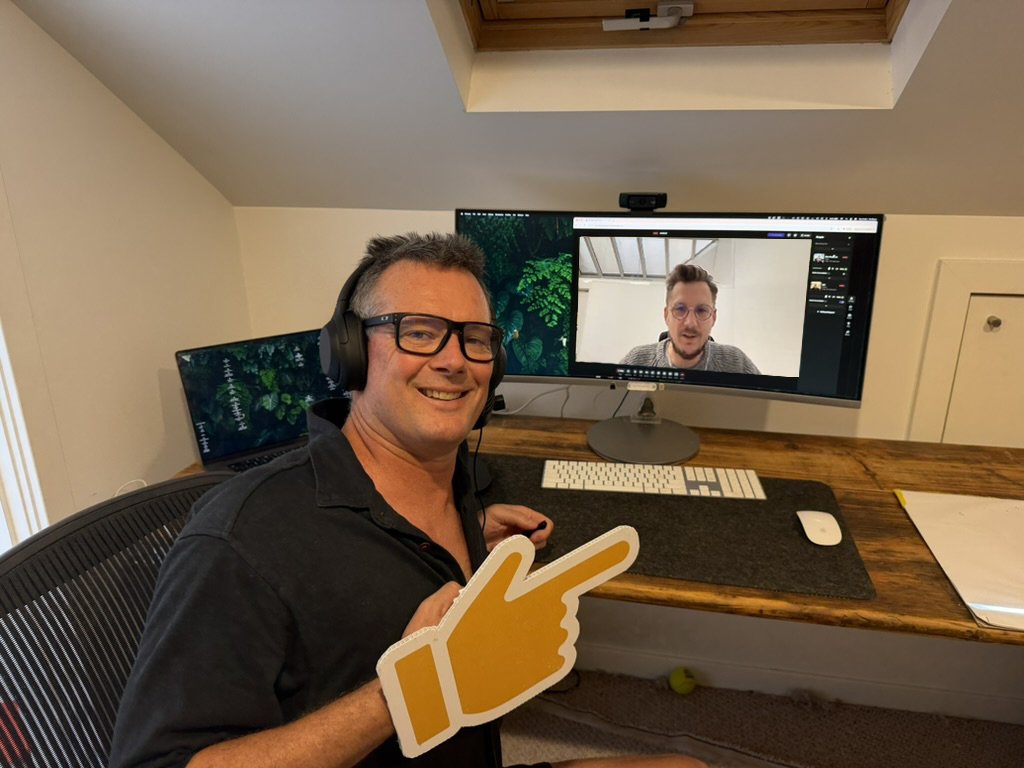
Recording via Riverside FM with Dave in France
Full Episode Transcript
Ben: 0:05
Okay, so you good? Yes. Good. Um, okay, so oh I think we're ready to go. I'll do a little intro and then we'll get into the question. Nature. Isn't it a beautiful thing? But no matter how many times we see a field of flattened trees or a koala without a home, not that many of us seem to find the time to actually get out and about and do anything about it, me included.
Ben: 0:28
So what if the answer was as simple as kicking back with a nice cold beer? That's the idea behind Hawke's Brewery, co-founded by mates Dave Gibson and Nathan Lennon, along with Aussie ex-Prime Minister and beer sculling champion Bob Hawke. Hawke's Brewery makes tasty beverages that help protect and regrow the Aussie bush. And today Dave is here to tell us all about it. G'day, Dave. G'day. So your career was in advertising, working on some of the most interesting campaigns in the world, including launching Toyota's first hydrogen fuel cell car by seeing if it would run on cow dung. How on earth did you go from that to starting a brewery?
Dave: 1:03
That's a really good question, mate. I I think um Nathan and I got to a point in our careers where, yes, we'd worked on some pretty amazing brands, had some great agencies, and you kind of start to think, oh, wouldn't it be nice one day to have your own business? And I think we're at a point of our time, you know, careers where we kept sort of thinking about that. And I think there came a time where we were working on some brands and realizing also that a lot of brands we're working on just didn't have a soul or a purpose, really, I think. And for us, I think that was starting to play on our minds a bit. And um, anyway, so one day we were sitting in our office and it was the middle of winter in New York and uh snowing outside, and I think we were missing home. And uh, yeah, Nathan turned to me and he said, uh, if you're back home right now, who'd you most want to have a beer with? I think he thought I was going to say, you know, another mate or friends or family, and I just said Bob Hawke.
Dave: 2:02
I think that moment was a bit of a serendipitous moment, and um, we just started talking about Bob Hawke and what we loved about him as being children of the 80s, both of us. And then um soon, quickly with our, you know, our advertising minds kind of worked out that actually that'd be a jokingly said, Oh, that'd be make a pretty good beer. And then I think we both just sort of got this feeling and we actually realized we had a connection to him through an old boss of ours and all and a friend that was sat on the board of a charity with Bob. And so we did this little presentation and we sent it off saying, you know, Mr. Hawke, we want to have a, you know, I mocked up some little sort of bottle of Hawks and um it looked awful, to be totally honest with you. And um sent this email off saying, Mr. Hawke, we want to have a beer with you and talk about starting a beer company, thinking we'd get nothing back. And once we'd sent it, we sort of shook on it, Nathan and I. We said, if he gives us anything but a hard no, we're gonna really give this a crack because we just had a feeling. I don't know what it was, it was just a gut feeling. And and we generally, well, I especially go on my gut.
Dave: 3:05
So sent this email off, thought nothing of it. Three days later, we get an email back from Bob Hawke saying, Oh, look, guys, not sure about setting up a beer company. I'm 86 at the time. But look, if you're ever back in Australia, ever back in Australia, come, you know, I'd love to have a beer with you. And so we took that as a yes. And I think we also realized that, you know, in all seriousness, we we spoke to our friend and he said, he said, look, I reckon he'll probably do it, but you'd have to fly back to Australia. And I don't think you guys are going to do that. We said, bugger it, we'll do it. So at the time we had a lot of work on and realized that we couldn't keep working. So we had to, we basically had to walk into our boss's office and resign. And he was Australian, our boss at the time. And he said, Are you going to another advertising agency? And we said, No, we're going to set up a beer company with Bob Hawke. And I think he just laughed and he went, I think you guys are full of it. But um, good luck, good luck to you.
Dave: 4:01
And uh we got on a plane about two weeks later, I think, and and met Bob in his um kitchen. I was nervous as hell. And um, we'd all, you know, we dressed up in sort of suit jackets and we had a big presentation and we walked in thinking we're gonna meet Bob in his boardroom. And um he actually was in his kitchen, in his basically sort of this matching tracksuit, this 80s tracksuit. And he on the way to he'd asked us to get him a cappuccino with two sugars. So we had to sort of, we're running a little bit late because we had to go and get his coffee. We turned up there and he was reading the paper, doing the crossword as he does, or he did. And um he goes, All right, what's this about? And we're like, Oh, it's the beer, Mr. Hawke. We're we're here to talk about the beer. And so we had this presentation and we're, you know, like advertising guys, we're going through this presentation and he had a copy and he slammed it shut halfway through and he went, Yeah, right, oh, this is all good, but um, why do you think this will work? And he shot it straight at me. And you know, this was my childhood hero, and I I just I honestly just froze.
Dave: 5:02
And um, thankfully, Nathan had the the confidence to say to him, Mr. Hawke, with all due respect, this has to work. We've just quit our jobs back in New York. And he went, Oh, you've just quit your jobs. All right, I'd be a bum if I said, I said no, I'll I'll do it. On the one condition that I don't I don't want to earn anything out of this. I want all my my share of the company to go to Land Care Australia. And we're like, of yes, yes, whatever you want. We shook on it. And then uh yeah, he sat on his, he basically called the CEO of Land Care right then um and said, Oh, we're doing a beer, I'm giving all my share to you. And she said, Oh, okay, amazing. He hung up the phone and then we gave him a cigar as a thank you because he liked his Cuban cigars, and then he sat out on on his um his patio and basically told us political and golf jokes for an hour, and then and then we walked out of it and looked at each other and went, okay, right. Now we've got to do we've got to do this, not knowing anything about business, brewing, or anything else. So yeah, that's basically how it all sort of a long-winded way to tell you how it started.
Ben: 6:06
What a great story. And it's even got I'd be a bum if I said no, one of his one of his most famous sayings. Exactly. The true one of his famous sayings. So interesting. So it's Bob. I mean, you wanted to start a brand that had soul, as you say, or purpose as it gets called, you know, but but it was actually Bob Hawke who said, I think this is the cause we should go for.
Dave: 6:26
Yeah. And I mean, we'd had a few sort of causes we were thinking of, but land care, land care made sense. I mean, he set it up in 1989. He helped set it up. And the environment and social causes were always hugely important to Bob, way before it became trendy. Bob Green basically said at one stage, you know, Bob Hawke was our environmental prime minister. And yeah, so the environment was always massively close to his heart, and and land care just made sense when he said it. So, yes, of course, makes total sense. Awesome.
Ben: 6:58
So, so that's a great start. You walk out, and as you said, you've got the idea now, but how do you turn the idea into beer? I mean, who do you call? Where do you begin?
Dave: 7:10
Well, we we basically sort of try to go through all our contacts and work out who we knew that that knew someone that was a brewer. We eventually found a mate that had a mate, and um, we went and uh had a few meetings. We basically went through about two or three brewers before we found our first one that basically pilot brewed our brew. And basically it was a process also of doing all these pilot brews and taking them back to Bob's house to get him to taste it because obviously he had to be involved. And I think that's the one thing that people are always a little bit surprised about. I think they think we just, you know, got Bob's likeness. He wasn't involved and we we we went off, you know, we ran off with it. But um Bob tasted all the beers. So once we had a lager that I think we'd all settled on, yeah, we basically did what's called contract brewing, where you go and you take another, you don't have a we didn't have a brewery, obviously. So at the time, we use other people's, you rent other people's equipment and brewery basically. And um, we did a limited batch. And then our first batch that Bob launched, actually, uh in Sydney in 2017. And yeah, thankfully it it won it, won Australia's best lager. And the first year it was brewed. Because that was the other important thing, is that yes, we had a strong brand in, you know, being advertising guys, of course, you realize you've got a strong brand in one of the most famous beer drinkers in Australia. But you also had to make sure that you brewed a really good product because if the brand's strong and the product's rubbish, then you're not going to get very far, are you? So, yeah, so we were very fortunate to have a beer that was great from the get-go.
Ben: 8:47
So clearly Bob had an excellent palate if he chose that lager and then it became beer of the year.
Dave: 8:52
Yeah, he did, and we brewed the lager to be a pretty typical Australian lager. What's funny is that we got him to try some of the more fruitier beers we created, the pale ale and um a couple of the others. And the minute he tasted the pale ale, he he sort of he didn't wince, but there was definitely a not a great look on his face. And he said, nah, I prefer the other one, as in the lager. So um, we're actually going to run an ad one day that basically said, you know, shot of that beer and said, No, I prefer the other one, Bob Hawke. Because he wasn't never backward in coming forward. But yeah, he liked the more classic, classic beers, the fruitier stuff.
Ben: 9:26
I think you've even got a line on your website about the fruity stuff saying not too fruity. So even your grandpa might like it. Exactly. And I had to met to all the grandpas out there. So so how much did you brew as your first batch? Like how many boxes?
Dave: 9:40
I think we only brewed at the time 70 kegs to release. We went on tap first. And before I was the things you remember now, but we had to, because we didn't have it in cans, we had to go around pubs with bottles of it. Those, you know, those water bottles you can get with the flip tops? They sort of, yeah, Grolsch beer bottles used to have. So you went on tap first? Yeah, yeah. Yeah, yeah, yeah. So we'd have to go and put it in and make sure we try and get to the pub as quickly as we can before it would the carbonation would go out. And um, so we were running around Sydney trying to get because people were like, Yeah, Bob Hawk beer, I get it, but what does it taste like? So we had to get everyone tasting it to put it in their pubs, and we basically put it in 11 pubs to start with around Sydney. And we call them the first 11, a cricket reference. Bob was pretty, I think everyone knows, pretty mad cricketer and cricket fan. So we had our first 11. We brewed, I think, might have been, yeah, 70 to 80 kegs and gave each pub, you know, allocation.
Singers: 10:39
In the first weekend, of course, because of the, I think the buzz that Bob Hawke's launched a beer, we sold out of it in two seconds. So I had to go and we had to, um, we had another batch on the way, which is lucky. And then I think 10 kegs left over. I had to put in the family Mitsubishi, the old Mitsubishi, and pretty much broke the axle on the back because um I didn't know how heavy a keg was at the time and deliver it, but that they're the things you do when you've got no idea what you're doing, to be totally honest.
Ben: 11:07
So you're literally going around going, I try my beer, you'll like it. Please stick it in your pub. And did you find that the little decal, you know, the little decal that goes on the tap? Yeah, did you find that just that alone, the fact you had Bob Hawke on it, was enough to get people to go, well, it definitely opened doors.
Dave: 11:23
It definitely opened doors, and which was a good thing because they're like, Oh, yeah, I'm interested enough that you've got one of Australia's most famous beer drinkers on the logo, but now I want to try it. So yeah, we basically had to, you know, his face opens doors because of the the power of Bob Hawke and the brand of Bob Hawke. Um, but if the product didn't back it up, I don't think we would have gotten as far as we have.
Ben: 11:46
So he sells the first beer, but to sell the second beer, they've got to like it. Exactly. Exactly. Yeah. So I want to investigate the nature piece. But so first take me through how that works. Like I buy a beer, what's my impact on nature? But then I'm also interested in how many people really know that and to what extent does that form part of your story?
Dave: 12:07
So, how it works is basically every year we work with land care to determine what projects they've got around the country that are in need of the most support. So, everything from mango regeneration up in northern Queensland down to South Australia, where we're protecting pygmy possum habitats, to then to local our breweries in Marrickville in Sydney. And there's a local land care group called the Mud Crabs there, which I love the name of, and they help the Cooks River uh regenerate the Cooks River there. I've picked up plastic bottles with them actually. There you go. So they've got a great name and a great bunch of people. And as you probably know, there's groups like that all over Australia, Land care Group. So we work with land care to determine who needs the funding the most every year, and then they get that funding to help them do all these different projects all over Australia.
Ben: 12:56
So literally Bob's percentage of profits goes straight there.
Dave: 13:00
Correct. Bob's original campaign line, I think, was bringing Australia together. And I think beer in Australia is the great product to bring Australia together. And if we can do that, you know, if consumer behaviour is already doing that, and if I can just sip a beer and it helps the environment in Australia without doing too much, then I think you're tapping into consumer behaviour and you're yeah, doing something people are already doing to do good without having to go and just sit on your ass and drink a beer. Yeah, do anything except for exactly except for exactly except for for drink a beer. It's so good. Pretty much, um, which we all know we're good at in Australia. So yeah.
Ben: 13:36
So do you reckon most people who drink it know that story? I mean, you don't have to look too far to find it, but do you think it's a known thing? And what role do you think it plays? Does it add a bit of, oh, well, I might as well, if I'm choosing beer A or B, I might as well help out some pygmy possums or a koala or does it make them maybe they read it afterwards and and oh, I didn't know that. Now I like this, you know, I liked that beer, now I like it even more. What's its role in all this?
Dave: 14:04
In the early days, Nathan and I would have to go out and do tastings at bottle shops, basically. So on a Friday night, we'd be, you know, sitting in a bottle shop in Rockdale with a table there with all the beers, and people would come in and go, Would you like to try a beer? And that was a really good way to get the story out and people to taste the beer. So at that point, we would talk to people. Because honestly, when you originally saw this thing, you'd probably much think it was a gimmick, right? Bob Hawk beer, yeah, I get it. Okay. So we would be very clear on the fact that, you know, this actually gave back to the environment. And I think also, you know, Bob transcends politics is pretty he while he was staunchly labor, I think you can't deny what he, you know, whether you're liberal or whatever, you can't deny what he did for the country. And so I don't even have staunch liberals that, you know, tasted the beer and liked it, but didn't weren't too keen on Bob Hawke, you know, some, you know, your grandfather that was a some bloke's grandfather that was a liberal supporter.
Singers: 15:01
But when you told them about what he did and the fact that he gave up his share to give it to Landcare, that you could see their mind actually change. They're like, okay, this is the selfless act. This guy actually did care. He's not in it for the money. So we've done a little bit of research among people on that exact question. Do you, you know, does having a purpose-led brand help? And I look, I think it does, Ben. But I think what we found is that people today, they don't want to be hit over the head with it. They want to know you're doing it and they want to know you're doing it, but don't bang on about it. Just go and do it and do it, do it, you know, do it, do it with integrity and do it with purpose, but don't bang on about it. Because as you well know, there's a lot of brands, big brands today that are, that have jumped on that bandwagon and greenwashing the hell out of everything to try and sell to consumers. And that's been one thing for us is like, no, we haven't jumped on the bandwagon. This was a pillar and the reason this company started, without Bob doing this, it wouldn't have, you know, without us to agreeing that and Bob doing it, it wouldn't have happened. So I think, yes, if I think if there's a generally Australians want to help as a country. And I think if there's a beer there that helps and they like the taste of it, they're probably going to choose that over another beer, I think.
Ben: 16:14
Do you think some people are suspicious? Like as you said, they're suspicious when they first see Bob's face. Well, what do you do? Just stick a drawing of Bob on it and then they find out, oh no, he's already a, he's actually a co-owner. Do you find the same problem when you talk about, oh, by the way, we give money to the environment? Are they at first suspicious because they've been kind of lied to by some brands?
Dave: 16:33
Potentially. But then when you can clearly tell them that Bob helped set up land care in 1989, and if they're not educated on what Bob did for the Australian environment and social causes, you educate them on that then too. I think they quickly realise it isn't greenwashing, it's actually an integral part of the company and it was there from the get-go.
Ben: 16:53
Yeah, great. So it is a longer story, and you've got to take the time to tell it. But if people do take the time to learn it, they believe it.
Dave: 16:59
Yeah. And I I think you've just, you know, a big part of Bob's personality and we all our values of the company are built on some of Bob's values, some of Australian values, and some of our values. And I think one of them is authenticity. As long as you're being authentic, I don't think you can lose. I think within our brewery, we've got, I think you've you've been there, we've got a pool room and museum to Bob. And that also tells, that's a very good asset to tell the story of Bob because our generation know of Bob Hawke, but all you know, 20-year-olds growing up now probably haven't heard of him. So you need to, or something their grandfather said or their dad said about Bob Hawke, but they haven't really experienced him. And now that he's passed, it's our job to sort of carry on part of that legacy. And our poor room and museum to Bob does help tell the story of his political career, yes, but also his environmental stance.
Ben: 17:49
Look, it's a really interesting business model because I mean, you've seen companies do a give back model. You know, you buy one, gives one like Tom's or someone like that. And you've seen brands attached to a known person. That's pretty common. But to do it the way you've done it, where it's actually all connected in one, I've not really seen it before. It's it's quite a unique business model. Have you seen it work anywhere else before? Have you seen anyone else give it a go? Do you think more brands could do this? Because I mean, if you look at someone like Bob Hawke, you go, well, he he didn't need the money. So by doing this, he's created an ongoing legacy after his death. And I think there's probably an awful lot of rich people who don't need the money who could lend their names to these things, but choose their cause and leave these legacies. Have you seen anyone else give it a go or or is it unique?
Dave: 18:35
Um, I haven't in terms of um products. That's not to say it hasn't happened, but I haven't seen anything that's come across my desk that's basically um, yeah, a celebrity that's partnered with a product to actually give back. I've seen a lot of celebrities obviously partnering with brands to auction things off and all that sort of stuff, which yeah, sure, it that works, but they're not giving anything up of their own wealth or their own self. And I think that if you're going to create a business today with all the problems in the world, any business needs to inherently have some sort of purpose to counter all the businesses that have been created years ago that don't, you know, not aiding the world in a good way. So I think, yes, there could be so many more celebrities partnering with products or brands to help the world and doing it authentically, not doing it as lip service or greenwashing.
Ben: 19:25
What other brands do you like in this space? I mean, they obviously don't have to have the celebrity involved. But as you say, and I completely agree with you, if you're starting a company today, if you don't have some sort of higher purpose, well, yeah, why are you bothering? So what are some of the ones that you've respect or you've seen or you just think do it really well?
Dave: 19:42
I mean, Good Citizens Eyewear, I think they've done it incredibly well. Again, you know, who gives a crap? Those businesses are doing it again, authentically. The fact that who gives a crap gives over 50% of their profits to their partner charity. Good Citizens literally takes one bottle and turn the plastic bottle and turns it into a pair of sunglasses that look amazing. Those two businesses I'm very jealous of. And I think the world needs more of those businesses, to be totally honest with you. Those guys are basically making purpose commercially viable. So they're taking, you know, and I do think I saw a quote in, I don't know who it was, but they basically said today, in this day and age, if you're into business, there's so much money to be made in purpose-led things if you do it authentically. Then now is the time to do it. And those guys are doing it. That's why all these investors out there should be investing in these types of products and not the old dinosaur oil and gas that we've been using, because they can actually, if they want to make money, they can make money. So yeah, I think good citizens and who gives a crap, and there's many more out there. And even, you know, Tom's, I think, started it off this buy one, give one three. But though, in terms of Australian companies, those guys are uh, I think, are the the pinnacle.
Ben: 20:51
So you you open up an interesting conversation with regards to Bob Hawke and his role in this. You know, as you said, celebrities often give their time to charities and so on, but it's a bit of a one-off, you know, a bit of time here, which is valuable. Time is the most valuable asset, but they're not giving up something long-term. And and well, Bob, he kind of did, you know, he could have made money out of this and he chose legacy instead or impact instead. And I think there's a bit of an uncomfortable truth in this, you know, in sustainability and purpose-driven brands, often, especially when you speak to bigger companies, they instantly say, look, you know, we want to do this, but it's it can't cost us anything. And it can't cost the consumer anything, and it can't cost the retailer anything.
Ben: 21:32
And I find it's like setting a trap. You know, at some point somewhere, if we want to solve problems of the world, well, something's got to change. So this idea that you give up nothing and get everything back doesn't kind of work for me. I'm not saying anyone should have to give up everything or even any of those particular things, but this general idea that no one has to give anything up, I just don't see how it flies. Look, I'm sure you make business decisions all the time where at some point you could choose something cheaper but less environmentally friendly, but you don't make that decision, right? Because it's authenticity. So you choose the higher cost. Um, but what's your thoughts on all this? You know, how do you get people to realise it's okay to give something up? Because you actually do get something back, like a planet to live on, you know?
Dave: 22:16
Yeah, exactly. I mean, I think it's exactly that. These big brands have to give something up in order to do something good for the world. I mean, in our case, in terms of give Bob obviously gave something up, but we've had to give something up in the sense of we have to find more funding to fund our. We basically, from day one, we said to our head brewer Brody, when we build this brewer, we build our brewery, we need to do it as in the most sustainable possible way. Otherwise, we're not really living the brand, are we? So we had to basically go and raise more money to install a, you know, we've got the largest solar array on any city brewery, 100 kilowatts of power, which really helps power the brewery.
Singers: 22:55
We partnered with UTS and we did a carbon recapture system that basically captures the carbon from the brewery and pumps it into a tank where we grow, helps grow our lettuce for our Chinese, Chinese restaurants and Troy Bales. And we basically had to spend a lot more money on all the systems within the brewery, so it was a lot more sustainable. And we could have taken the cheap option, of course, but and it still would have worked, but it's not really living the authenticity of the brand. And and again, we always go back to what would Bob do as a question, if if anything in the company. And yes, of course, the first answer is always I'd scull a beer. But when you get when you get past that, what would Bob do? Bob would do the right thing and Bob would do the authentic thing. So I think customers also see through brands that don't give things up. I think to your point before. You know, if you've got boardrooms and CEOs that are sitting there saying we can't give everything up, but let's change the packaging to green so it looks more effective. Customers are going to see through that pretty quickly these days. So yeah, in response to your question, I think if you are going to live with purpose as a brand and do it authentically, you need to, you definitely need to give you that something's got to give and you've got to give something up.
Ben: 24:06
And I guess you give up the cost of that. But as you said, you also had to raise more funds, which means you give up some equity too. When you bring in new shareholders, they take a piece of the company. That's how they roll, right? That's exactly right. But you create something better together.
Dave: 24:20
Yeah, exactly. And you create something better together and you learn along the way. And I think that's probably been the hardest thing out of this entire business, is who you bring on board is really important. And I think we're very lucky at the moment, we've got an amazing management team who are um all in their own right, amazingly talented people, but as a whole are the sort of people you can trust with your company. And it's really sort of hard thing to find, I think. And so we're very Nathan and I are very lucky that we've found a team that basically all share the same common goal of the business.
Ben: 24:56
Um, I mean, you said you give something up, but in that sense, do you think you gain something in that they're not just joining a brewery because they want to brew beer, they're joining your brewery because they want to do it right and they want to actually feel there's some purpose in what they do. Is that part of the reason for they're such a good management team, do you think?
Dave: 25:12
I think so. I mean, they all treat it like their own business. And that's why I think the culture is so strong. You know, I think Nathan and I said it at the start, but but they've carried it on in the day-to-day. And so we're very, yeah, we're very, very lucky. I think if you can have people you work with that, even though you've started a business, they carry it on like it's their business. I think it's that's the win.
Ben: 25:32
And what about investors? Because I mean, I've heard stories of investors that have really helped. And then there's investors, of course, people with a lot of angst. How did you find the right people that you felt were mission aligned and gonna be like with you for the long term?
Dave: 25:46
Yeah, that that's a it's a really good question as an entrepreneur. Finding the right investors is a huge, hugely important area to get right. Um, and if you don't get it right, I've heard some pretty, like you, I've heard some pretty bad horror stories. We're we're incredibly lucky that I think we've found investors that are on the same, have the same goals as as we do. Raising money is a massive, has been a massive learning curve for us. And I think it's a massive learning curve for any entrepreneur. Nathan and I bootstrapped this thing ourselves at the start. We put all our life savings into it to get it going. And, you know, and then we took on some friends' money and family money. Then you go to outside investment when you really want to expand. So, you know, building a brewery isn't cheap.
Ben: 26:29
And how much does it cost to build a brewery? Like $10 million?
Dave: 26:33
Um, yeah, I mean, it's in the millions for sure. And you know, we don't we don't have that kind of money, obviously. So we have to go to outside investment. And that's that's when things get pretty serious because you you're playing with other people's hard-earned money and investors that have worked all their lives to get that money, plus your friends and family, their savings as well. So the pressure is on to make it work. Because if things don't work, not only have you all the time you've spent building this business and Bob's legacy and all of that mixed in with friends that have put money in, it's a lot of pressure. But we are very fortuitous that we've got very supportive investors that have all sort of agreed to the mission and on the journey. Otherwise, I think it would be it'd be really hard. Very hard.
Ben: 27:20
Any top tips for someone looking for an investor?
Dave: 27:22
Like how do you do it? You've got to get your pitch deck right. You know, they're basically investing in a business, yes, but they're investing is in you as the founder or the entrepreneur. And if you can't succinctly show them that you are gonna make this work, then I think it's gonna be a lot harder. I think, you know, network is always obviously an important thing. And we used a lot of ours to find friends of friends or other people. And our financial advisor was very, you know, great at finding investors too. I think you've just got to use your network, but you do have a very succinct presentation. And look, not everyone we met with was like, yes, I'm gonna put money into this thing. It's a funnel, and you've just got to keep chipping away until you find the people that do believe in what you're doing and want to support it.
Ben: 28:09
So so you've said investment was one of the harder things along the way, but what were the easier things? Like, what were the things that fell into place that you sort of went, gee, I thought that'd be tougher?
Dave: 28:19
To be honest, probably now that I look back at it, Bob saying yes was has been the only one of the biggest things that was easy. Um, and I thought it was going to be hard, but he said it pretty quickly. Look, mate, aside from that, I think I can give you a list of things that weren't easy from building a brewery and building a brewery in COVID to breaking the axle in the Mitsubishi, not brewing enough beer to yeah. And then in one part, on the other hand, in winter, the next winter, realizing that you've brewed too much lager in winter when people are wanting to drink darker beers. So then you're sitting on a little bit more used by dates of beer is a whole thing I was we have to learn. Like it's got obviously got a freshness, it's a live substance. So you kind of like milk, it goes off. So there's, yeah, there's just there's been a million learning curves.
Dave: 29:07
But I think the one thing I would say if anyone's thinking about starting a business or launching anything is, and it sounds probably sounds very cheesy, but it's really persistence and belief in what you are doing. There's that Cortez who basically the burning of the boats. I don't know whether you've ever heard of that sort of theory, but happened in history where he was attacking South America, I think it was, and basically they got there and he said to all of his captains and everyone, you've got to burn the boats, so we can't go back. So you must win. Even though that's a little bit of an aggressive analogy. I think it's really like you kind of have to go all in. Otherwise, there's kind of no retreat. Because if you don't go all in, you're kind of doing it a little bit half assed, I think. That's not to say you can't start it, you can't start it as a side hustle and while you still got another job and obviously fund it that way, for sure. I'd definitely do that. But I think there is a point where you've got to go. I mean, I'm all in on this thing and just be persistent as hell.
Ben: 30:03
All into play, hey. Exactly. It's a hell of a poker room. Yeah.
Dave: 30:06
Yeah.
Ben: 30:07
So speaking of rooms, you mentioned the Bob Hawke room at the brewery. You've got a fantastic place, the Bob Hawke Beer and Leisure Center in Marrickville, which is a wonderful place to go for dinner, for beer. It's like a big old industrial sort of um machining kind of building. And it has a succulent Chinese restaurant for those who recognize that reference. What it also has is a pokey machine that donates its earnings to climate, which I thought was a nice little extra idea. How'd you come up with that one?
Dave: 30:34
Um, we were sitting in uh, I think at the time pokies were a really hot topic and the damage they were doing to Australians. We were sitting in having lunch one day. Myself, Nathan, and our head of sales, Stav, who honestly stab could have been his head of sales. He used to um, I don't know whether you remember the band Blue Juice. Yep, I do. Yeah, yeah. They I think they got to like number seven, top ten in the Triple J Hottest 100 one year anyway. He's the he used to be the lead singer of Blue Juice. So he's a very talented individual among being our head of sales. And he, I think we're talking about pokies, and he's like, Oh, wouldn't it be great if you could actually take all the winnings and donate it to Landcare?
Singers: 31:14
Anyway, so all the three of us just got talking. Like, well, let's why don't we just create a pokey that basically gives all the money to land care? And um, you know, another stupid idea, but it was like stupid ideas are the ones that kind of work sometimes, and I think I've always been keen to try stupid ideas out. So we spoke to a friend of ours, partner of ours, that has a company, technology company called Nakatomi, and they're good at building things like this. And I said, could we build a pokey machine? Could you build a pokey machine that gave back the environment? And they're like, not sure, but let's give it a go. So we yeah, we built this thing with them, and they've all the algorithms work like a pokey machine, except that it just does good instead of doing bad. So that sits in the pool room, and you can buy a beer and get a token and go and play that. You can win a few prizes, but all the money equivalent of the token goes back to land care.
Singers: 32:02
So that was one of our probably over the last couple of years, proudest moments when we launched the pokey. Because again, I think it's taking something inherently authentically Australian in a pokey, but turning it actually into something that's actually doing good. So yeah, have a slap for the planet.
Ben: 32:19
Have you tried getting it into any other pubs? There are there are lots of pokies around.
Dave: 32:22
We're gonna take it on tour around Australia, and I think we're still gonna look to do that because we'd love to be able to sort of, you know. I mean, the dream would be that the dream would be that we'd try and um build more of them and get them in pubs around the country, or at least take this one on the tour, the Australian pokey for good tour.
Ben: 32:41
Don't don't break the axle. Yeah, exactly. So there's a commonality to your good ideas. It's like you're sitting around, you're having a chat, and up comes something a bit ridiculous, and you take that and you go, Well, maybe we should do it. We need more people like you having more good ideas in this world. So, any other tips for someone sitting there going, Yeah, I want to go all in on an idea, but I just don't have an idea. Like, where should they begin?
Dave: 33:04
I think it's got to come from what's inherently, again, that word authentic to yourself and again what you believe in. And I think in this day and age, as you said, and a lot of the guests you're having on here, they're looking at the world's problems and solving them. I think those two things, if you can look at the what the world needs and combine that with your own values and passions and I guess gut feel, then I think that's a winning formulation for finding a business idea. There's lots of different places you can look. There's the UN's report on climate change and social justice in the world. There's a list of problems that need to be solved on that. And then, yeah, again, mixing that with your own values and your own passions is the way I think, I guess what feels authentic to you.
Dave: 33:49
The other thing I'd say is too, is looking at culture. I think we draw from it at Hawke's is Australian culture. It's not just Bob, it's bigger than Bob, it's Australian culture. It is, you know, for example, Chinese restaurant. We've got a Chinese restaurant in our brewery and the Lucky Prawn, which people seem to really like because I think we took something that's inherently, you know, Australians love. There's a Chinese restaurant in every bowling club and and you know, around Australia, generally in every country town. So we created one, and you know, that's authentic to Australia and Australians. But there's also a deeper meaning behind that is that again, going back to Bob and authenticity, during the Tiananmen Square massacre, Bob let 30,000 Chinese students stay in Australia. And he didn't get any approval from his cabinet, he just went and did it because it that's what felt right. And I think, you know, that's about leading from the heart. And I think with any idea, there's got to be some heart in it, heart in it as well. So probably that's a long-winded answer to hopefully answer your question.
Ben: 34:49
It's a good answer. The other thing you add, which I like is fun. I mean, it seems to be like, because what you said is quite deep, like especially going through and looking at UN reports. It's not a fun read, you know. It's not an easy read a lot of the time. But you're managing to take it and distill it into its fundamentals and then like add a bit of fun on top of it. Do you think that's a big part of getting people interested in this stuff? Because let's be honest, social and environmental issues that can be depressing and quite frankly often boring and feel like too big for anyone to deal with, you know. Whereas when you add fun, it makes it feel a lot more accessible.
Dave: 35:22
Yeah, it's a really, really good point. Um, that's a really good point, actually. And I think Pete also in this day and age, people are so busy, there's so much bad going on in the world. If a brand can do good but do it in a fun way, I think is hugely important and will probably aid the success of that brand. Again, going back to who gives a crap, they do it in a fun way, right? The brand at the end of the day, they've taken toilet paper and done good with it, but also made it fun. They're not trying to be anything they're not, it's toilet paper at the end of the day, but they've done it in a fun way. And I think that's a really good point because I do think consumers are also sick of brands, again, greenwashing or doing it in a way that because it is quite boring.
Singers: 36:01
Sustainability can be quite boring. And I think, again, people want to be entertained. And if you can entertain them in a fun way, but also do good at the same time in an authentic way, I think, yeah, I don't think you can lose because yeah. And I think that's what we've again, going back to your question before, do people care that you support the environment? Yes, I think they do, but first and foremost, it's a beer at the end of the day. They want to have some fun. Don't bang me on the head over the head that the environment's that climate change is coming and it's bad. We all know that, but what are you doing to solve it in a fun way? I think is the important thing.
Ben: 36:36
All right. A couple of fun questions for you before we go. What's your favourite beer? Of our beer or any beer?
Dave: 36:42
Of all beer. Of all beer. What's the best beer of all beer? It's a really good question. My father is from Tasmania, and like most Australian males of my generation, you grow up drinking what your father drank. So I would have to say Boag's would be probably my favourite beer outside of our own beers.
Ben: 37:00
And that'd mean he's from the northern part of Tasmania, is that correct? Correct. Yes. Yeah, there's like a beer line that goes from Tassie, right? Everyone at the top drinks Boag's and everyone at the bottom drinks Cascade.
Dave: 37:11
There is...and um, I don't mind a Cascade either, but yeah, Boag's is probably the beer of choice. Funnily enough, it's also the beer of choice of um our head brewer, Brody, who two reasons when he came in for the interview that I knew he was the one. One, he said, I asked him this exact question if what's your what's your favourite beer? And he said Boag's. So that was a big tick. And who do you support? Who do you support in the AFL? And he said Geelong. So that was another big tick. So yeah. He was in, didn't have to be able to brew beer. Exactly. And although luckily he's a very good brewer, so we uh had all the boxes checked. Damn, what a what a great bonus.
Ben: 37:47
A brewer who can who can actually brew beer.
Dave: 37:50
Yeah. Um, best food to eat with beer. Oh mate, what do you think? Naturally Chinese food, Chinese, yeah. Our prawn toast is our head chef uh and partner, Nick Wong, who created the restaurant with us. He's yeah, he's done a very good job at making the probably the best prawn toast in uh in Australia, I'd say, hands down. So that that with a lager.
Ben: 38:12
What a winning combo. Um, best place you've ever had a beer.
Dave: 38:15
Ooh. Um, I'd say, yeah, it's not to get too morbid, but at the at Bob's funeral was at the service was at the opera house. And we were lucky enough to get invited to it. And it's probably the most proudly Australian moment I've ever had in my life was watching uh Bob's sort of family leave the opera house, and then they played Land Down under on the Didgeridoo was a pretty sort of rousing, patriotic moment, I think, for me. But then afterwards we had the the wake, they had the sort of wake after this down in the bottom of the opera house with the view of the bridge, and they were serving our beer, and I had a beer there, I think at the time, and talking to Met Paul Keating, and I was thinking this is a pretty, yeah, this is a pretty good place to have a beer. Yeah, it's a pretty good beer. You might have another one. Yeah, I might have another one, exactly. Funnily enough, I offered, I offered Paul Keating one, but he said no, I just drink, he was just having a wine.
Ben: 39:09
So it's uh yeah. Um last one, what's the one thing people are surprised by when they find it out about you?
Dave: 39:18
Um, I think that they're surprised that Bob was involved, to be honest with you. Again, going back to what I said before, they think that we just ripped off his face on a logo and just went ahead with it. But I think they're very surprised to know that yes, he was a partner, he's involved, he gives all his share to land care, and that he that yeah, used to do everything from taste the beers to try and get us on Qantas. Like he he would ring ring the CEO of Qantas regularly to try and get us on on the on the planes, not knowing that you know there's certain, yeah, there's certain protocols and money that needs to be spent to get on it. So yeah, so that's probably the biggest, the biggest thing.
Ben: 39:54
Nice. And look, you said it, the world needs more companies doing this. And it is, as you said, the future. Yet so many companies and brands are stuck in the past. So there's so much opportunity out there, really, and it needs people to take it. You've said think about issues you care about. You said being authentic, you know, don't cut corners. You've said be all under play fundamentally, burn the boats. Um, you've said many good things. Any other tips for someone wanting to follow in your footsteps?
Dave: 40:22
Um, I think just start. Honestly, I've been guilty of having so many ideas I want to do and saying and putting them off for years. And I used to carry a little book around and I still do. And I think this is another good tip. If as I had any idea, I'd just write it down. I think it's just picking something and starting. Because if you don't start, obviously it's never going to happen. So I know it's basic, but I would just say pick something and give it a go. And if it doesn't work, it doesn't work. I mean, we had an idea to start a big company with Bob Hawk. I never knew that we'd actually then have a brewery and a restaurant and a bar. And yeah. And if we hadn't started it, it'd never, you know, just start it and have the guts to do it and probably have no shame, I think, uh, is another sort of part of your army you need as an entrepreneur. You know, not having the ability to look silly, I think is important because, you know, sending an email to the former prime minister of Australia is could have failed pretty horribly wrong. But um only, I think only in Australia could you send an email to a former prime minister and ask them for a beer. Nowhere else you could do that. So you're kind of lucky.
Ben: 41:25
Possibly only Bob Hawke
Dave: 41:26
and possibly only Bob Hawke.
Ben: 41:28
Exactly. Well, that's great. So for everyone listening, if you're looking for a refreshing cold beer, go to hawksbrewing.com. It's H A W K E Sbrewing.com or look in the fridge at your local bottle shop because it's in all the best ones. And if you're in Sydney and you want a fun night out, the Bob Hawke Beer and Leisure Center in Marrickville has the world's best prawn toast. Just ask Mr. Wong. Um, anywhere else that good people at home should go to follow you, maybe some social media handles?
Dave: 41:56
Yeah, at Hawke's Brewing Co. on Instagram. Yeah, we're all over the socials. So yes, please chuck us a like and get involved that way. Well, thank you. Thank you. It's been wonderful talking to you, and I really appreciate your time. Thanks, man. Really appreciate it. Thank you.
