
'If You Can Ski It, You Can Be It'. Maria Baker on how Nobody's Princess gives females of every shape and size confidence to hit the slopes.
👂 Listen on Apple Podcasts
👂 Listen on Spotify
👉 Why listen?
Here's a sad stat: according to Suncorp 2019 Australian Youth Confidence Report around half of teenage girls stop playing sports by age 15 and confidence is one of the main reasons why.
It's not just teens either. New mums often find sports clothes don't fit like they used to, and even twenty somethings who don't fit the 'model' body simply come to believe some sports just aren't them - skiing and snowboarding included.
Maria Baker has a good idea to do something about it.
After splitting her snow pants - and finding out her friends had the same problem - she founded Nobody's Princess to make high quality, technical snow gear to empower females of all shapes and sizes to hit the slopes with confidence.
And, with stockists now across Australia, NZ, Japan and the USA, you could say the idea has...snowballed ❄️.
Tune in to hear...
⛷️ How one pants splitting episode too many provoked Maria into action
😳 The journey of learning an industry from the ground up
🥇 What it's like to sponsor an Olympic athlete
😍 The amazing messages of gratitude people send back
Huuuge thanks Maria for sharing your story. And you can find her gear at www.nobodysprincess.com.au
The Story in Brief
We gave AI a listen to the episode, and here’s what it had to say…
A ripped pair of pants shouldn’t lead to a revolution in snow gear—but for Maria Baker, that was the spark. What began as a string of split pants turned into Nobody’s Princess, a shape-first brand giving women gear that actually fits without sacrificing waterproofing, warmth or style. We dig into the moments that mattered: stalking technical designers on LinkedIn, crowdfunding to build prototypes, and the Kickstarter wave that brought retailers knocking before wholesale was even the plan.
We talk about mental load on the mountain and how bad fit isn’t just uncomfortable—it’s a safety risk. Maria unpacks the difference between size and shape, why alterations destroy technical features, and how inclusive design frees riders to focus on terrain, not waist gaps. The stories are powerful: a teen who smiled, finally, in a pair of snow pants; a flurry of messages from partners and parents saying the gear changed someone’s season; and an Olympic crossing with a Vanuatu half-pipe skier whose off-the-rack kit proved the point.
Behind the brand is a founder who shares the real grind: five-dollar days and five-million days, industry gatekeeping and copycats, and a refusal to chase fast fashion. Instead, she’s building a core range that looks good, fits right and performs hard, with features kept consistent across sizes so no one feels “othered.” We also explore what’s next—community events that welcome newcomers at any age, ambitions for local manufacturing, and the wider implications for women’s sport where access often starts with something as simple as finding gear that fits.
If you care about inclusive design, women’s sport, or what true product-market fit looks like when it’s lived on the body, you’ll love this conversation. Hit follow, share with a friend who’s struggled to find gear that works, and leave a quick review to help more listeners discover the show.
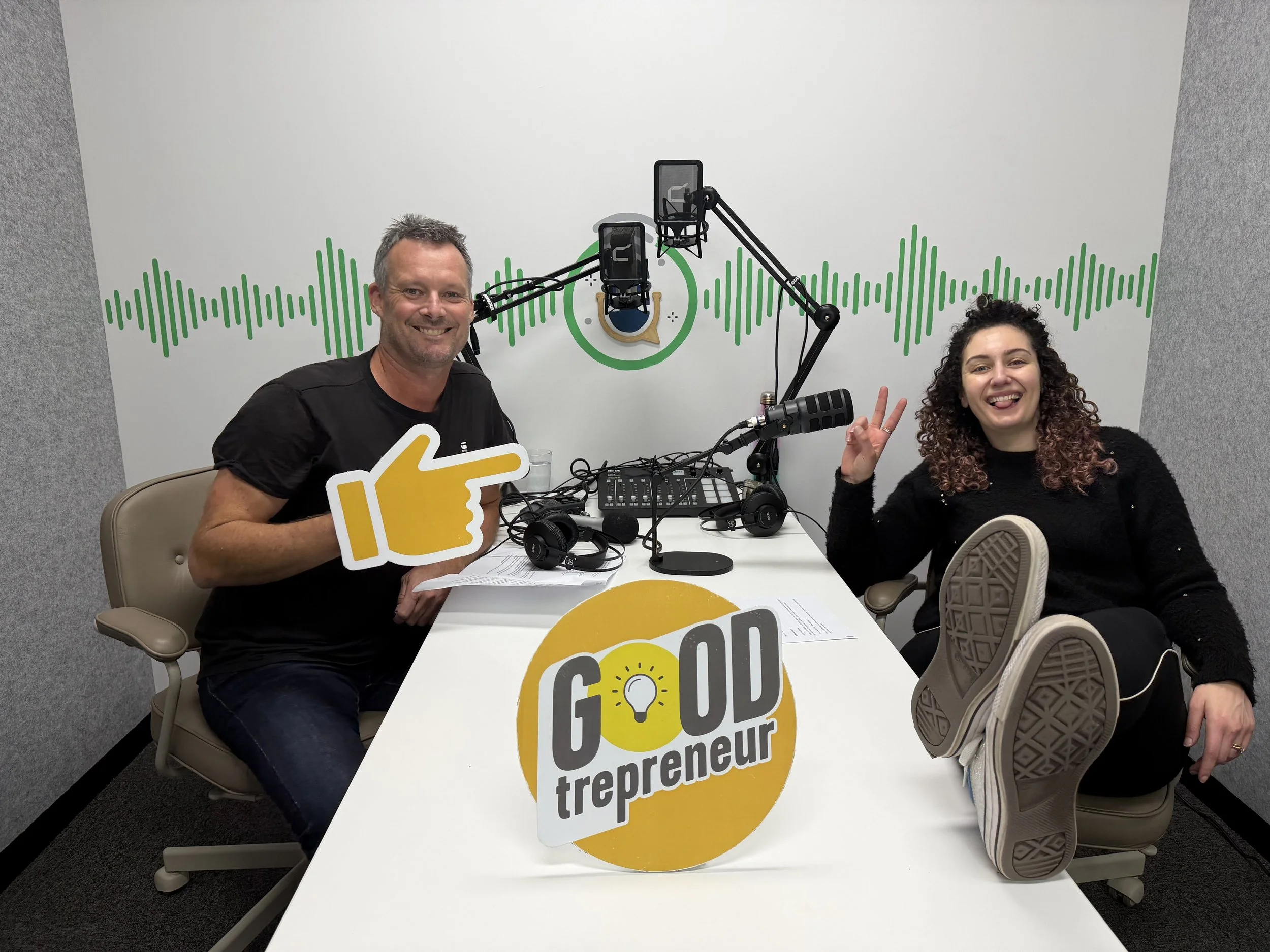
Recording at Maria’s warehouse in Melbourne’s Vermont.
Full Episode Transcript
Ben: 0:12
I know that feeling. I was at a wedding on the dance floor. I was busting the moves. The DJ hit us with an old classic rock lobster by the B-52s. Great choice. So the wedding thought. Things went crazy, hips went wild, and the four and a half minute market happened. You know the bit where they sing down, down, down, down. Well, we all got down, down, down, down, and as the music got quieter and everybody's ears tuned in closely. My pants split and an almighty pop that filled the room. I felt the cool breeze pour in, I saw everyone look my way, and then the whole party let rip in a celebration of laughter while I worked out how I was going to get back to my table and contemplate my predicament. It turns out I'm not the only one to have split my pants in public. Maria Baker is founder of Nobody's Princess, and her good idea is an upstart snowboard brand designed to empower women with booties of every size to hit the slopes, confident that their pants have got what it takes to keep it together. She's here with us today to tell us all about it. Hello Maria.
Maria: 1:11
Hello, how are you going?
Ben: 1:13
I'm very well, thank you.
Maria: 1:14
It's nice to know that splitting pants is a good story no matter what the industry or the situation is.
Ben: 1:20
I think splitting pants will always make a good story, no matter who, no matter where, no matter how.
Maria: 1:24
That's it. I remember my first time I split my pants. I reckon I was 13 on a school camp in the middle of a late water skiing, actually. I didn't do very well, but my bathers. Oh beer. Oh wow. So apparently I was destined for this, actually, if you think about it. I just didn't click on early enough.
Ben: 1:39
You're a master pants splitter.
Maria: 1:40
I am. I am not just chief, master. Yeah. I'm gonna go change my email signature.
Ben: 1:44
It's a superpower. It is. Um so in fact, you're um this your whole journey into the world of snowboarding gear actually began with a pants splitting story, not your first. Would you care to test?
Maria: 1:54
Apparently, yeah. So I actually think I totaled three pairs in my first few years of pants I split. But the most memorable pair was like a brand new pair. I literally didn't even get a day out of them. They were great, they were white, they were tight. And I was actually um, yeah, chairlift, Mount Buller, because that's where I sort of learnt to snowboard. I think this was my second year of riding at this point. And like, my things are breezy and like look down, and it's like, oh like I've actually got the photos because we hiked up to the top of the little summit there, and like, yeah, I've got these great photos, and I've also got this like escape happening. So yeah, that's probably the most like standout memory. And I had, yeah, two other pairs that I remember that I also did the same thing on. And funnily enough, I had some friends that also did it too. And we ended up repairing them ourselves and we'd sew little diamonds of the most ludicrous material you could find, so and call it a vag badge and like stick it over. So then we'd be sitting on the chairlift and kind of be like, whoop, like spread our legs and you know, flash this lime green metallic, you know, patch job that we've done on the crotch of our pants. So yeah, it's been a thing.
Ben: 3:04
Was that your rebellious way of saying screw you to the manufacturers of these?
Maria: 3:08
Apparently. I didn't know it at this time. Like, but yeah, it really was a, I suppose, a nice uh visual stand to this sucks and let's do better.
Ben: 3:16
And as you say, it turned out you weren't the only one with this problem. Well, you and your friends all sitting together on the quad lift had this problem. But you found a lot of other females had this problem. Is this true?
Maria: 3:27
Yeah, and that's the thing. I think being a bit of a like heavier set woman, taller, you know, I kind of thought it was isolated to me. And it wasn't until, you know, one of my friends who was one of the girls actually took me snowboarding for the first time, was like, oh yeah, I have the same issues you're complaining about. I'm like, You're a size H. Like, I'm a 14. What the hell? And she's like, Yeah, no, me too. And that was at the point that I realized that, oh, it's not just a size thing, it's actually a shape thing. And that's been kind of shown again and again and again over the last few years, really. And, you know, sizing is an issue within the industry and clothing for women, but it's actually around shape, more so.
Ben: 4:06
Yeah, and that's probably something people can get away with in average clothes, right? You kind of, I mean, I'm six foot four. Basically, I can have pants that are too wide or too short. They're generally my options. Occasionally I find the right one, but that doesn't really matter day to day. But if you're trying to do something that's a pretty intense sport, well, you either can't do it or you you split your bands.
Maria: 4:26
Yeah, exactly. And you know, everyone's like, oh, you can alter, you can change, but then you're all of a sudden sacrificing the the features, the waterproofing, the you know, technical features of your gear, yeah.
Ben: 4:36
And so, like all great entrepreneurs, you've identified a problem.
Maria: 4:40
Yes.
Ben: 4:41
But like most people go, that's a problem, and then they get on with their lives. You decide to do something about it and start a business. Why?
Maria: 4:47
I did, but it wasn't straight away. I probably, like I said, I think those first couple of years is where I had my incidents in my pants, and it really wasn't until I had time to sit and think about it and the fact that it hadn't left my head for a few years, I think is the thing. So I didn't jump on it straight away. I've had a lot of like ridiculous business ideas. I think like the most stupid one was traveling through like countryside Greece, going, you know what, we should move here and open up a cupcake shop. That would go real well here. What? Um, but yeah, I think because I had this idea and it was still just sitting in the back of my head for such a long time. Come COVID and I was working in travel, and everyone knows what happened to travel during COVID. I had a lot of free time on my hands. And and I had actually attempted to start up this business, I think like the year prior. I'd been looking around, trying for bits of information, and I obviously didn't have that time to put into it because I was working full-time. And yeah, something clicked the next time I went for it. Like I met the right people at the right time. I, you know, the right networking happened, and it, you know, as much of a pun it is, it really snowballed organically. So I love throwing that one in.
Ben: 5:55
I bet you've used that before. So break that down a bit, you know, because you've just probably compressed about a year and a half into 15-second statement there. Like, so you go, okay, I'm gonna do snowboard gear for people of all different shapes and sizes. What do you do then?
Maria: 6:10
Uh, what do you do? You stalk people on LinkedIn who are technical fashion designers and beg them to come and help you out on this crazy idea you have. You start an indiegogo and ask all your family and friends to chip in 50 bucks to give you some money to pay said technical designer. And I think I just kind of went for it because I never went in with the mentality of I'm starting this business, there's this huge niche, I'm gonna be a millionaire because no one's doing this. I genuinely went in with the whole idea that I was gonna make something better for me, and either other people were gonna like it, or by the end of it, I was gonna have a few really good prototypes that I could wear to the snow and be a little bit more comfortable in. And that's how I went into it, I guess. And that's what helped me kind of not get overwhelmed, not try and I think if I'd thought about it more about this is a great business idea, let's make it a huge thing, I probably wouldn't have taken the care and put in the effort I did because I would have been too focused on the outcome and the money.
Ben: 7:06
So at what point did you realize, okay, I got some nice prototypes here? I can now snowboard, probably with my friends too. I could make some for them. But at what point did you realize no, this is actually gonna work?
Maria: 7:16
Um, I think the first inkling that I was when I did the Kickstarter. So I did the Kickstarter about 12 months later after that indie go-go and put it out there because I had my prototypes, I was happy with them. And it was basically, well, if other people really want this, they'll back me to give me that money, that capital to do my first manufacturing run. And I did something like 800 units, which is still a huge amount, but you know, tiny when you talk about mass production. And when I did that Kickstarter, and because of the way I had gone about this, about being really community driven and active in seeking, you know, feedback and ideas and the pain points of these women in the snow, when I was doing the Kickstarter, I actually had retailers reach out to me. And I hadn't even contemplated, you know, wholesale. I was just like, yep, I can put them on a website. I know how to build websites because of my history of my career, you know, I know how to throw logos together because of my graphic design background, and I'll sell them online and that'll be it. So when those retailers actually came knocking and, you know, reached out just by Facebook, you know, and going, you know, we see what you're doing, we see this in store, we like the concept and we want in, like all of a sudden it was like, oh, okay, like this is gonna be more than just like a once-off production. There's like, you mean in a real store, like holy crap, like, yeah. And so that was when I think I clicked and, you know, the requests, especially once I had that first pantout in the style I made, you know, the requests, oh, but I'm this body shape and I'm this and I'm shorter and I'm taller, and you know, all of those things. I'm like, I gotta keep going. I've got there's more. And later that year, so this is now 2022, and later that year I went to my first trade show. So there is a Snow Industries trade show for retail. And I didn't know when you were going that you were meant to ring up retailers and book appointments, like because I had no idea. Like I've never run a business, I've never done sales, I've never done any of that. And my days were back to back with people just walking onto my stand, being like, we've heard, they've talked, like, you know, from the couple of stores that did end up getting some stock out of that first run. And, you know, all of a sudden I've gone from three retailers to like 30 by the end of that week in one trade show. Yeah. And I was like, holy crap. So yeah, that's they're probably like the two big moments that went, yeah, okay, maybe something's happening here. And it's not just I need some comfy pants, it's like, holy shit, there's a whole community of women who are being done wrong by the industry that need a better solution. So let's freaking give it to them.
Ben: 9:50
They call it product market fit, and never has it been a better term. Literally fit. Because I mean, realistically, I guess what you're finding is that if you were just to sit on a train station platform and look at every shape and size, about one out of ten people might fit the average shape that's sold, right? So your market is nine out of ten women.
Maria: 10:08
And like my biggest thing is you talk about gene shopping, you you model the words gene shopping to anyone, any and even men, right? It's not just exclusive to women. And everyone's like, ugh. And it's like, cool, now apply that to a clothing, a technical garment that you're meant to be doing with an extreme sport. And that's what skiing and snowboarding is. They're extreme sports. Look at your insurance policies. Um and it's like, yeah, needed. And as I was developing it, those prototypes, I'd see things that I'd never really paid attention to before, like the vastness of bodies and ages on the snow. I think I remember seeing one lady in track pants, and it was this, it was a day that was snowing, and she was wearing track pants. And I'm like, it's kind of like she's not wearing those by choice. There's no way in hell this person is wearing those by choice. So it's things like that. You know, yeah, you look around and it's like everyone deserves something. Everyone is different. Everyone has a need. They should have something.
Ben: 11:04
And do you see that as the philosophy behind the brand? I mean, nobody's prints it's snowboard gear, right? If someone looks at it.
Maria: 11:09
Ski and snowboard, yeah.
Ben: 11:10
Yeah, ski and snowboard. But it feels like the philosophy is kind of bigger than that. You know, like fundamentally, it's kind of empowerment. It's making sure everyone can enjoy, as you call it, a day of slaveful shredding without letting the clothes hold them back because they don't fit the clothes that they're meant to fit based on what people design.
Maria: 11:26
100%. The mentality of the brand now, as I've, you know, refined it into a proper mission and why and what, is around making sure that, yeah, no woman is left uncatered for and feeling uncomfortable because of what they're wearing and not just what they're wearing, but what they're wearing at the snow. And that's a really big part of it because it doesn't take long to have conversations with anyone about their gear and not just their clothing, if your binding's not quite set right at the right angle, if you feel like your stance isn't quite set up, if your boots are feeling a bit floppy or a bit too tight, these little niggles, they sit in the back of your head. And then it becomes no difference when your pants are too loose or you keep getting a gape at your waist, or you know, if your pants are too long and they're they keep hitting your binding, or if your jacket's not stinging right around your hips, or your hood's not big enough to go over your helmet. It's all these little things that when you're thinking about that, you're not looking out for the death cookie on the run. Like that's gonna make you eat shit. So that'll make you really uncomfortable. And it is like it's it's just if you don't have to think about that. It's almost like mental load, you know, we talk about this whole mental load thing, and it's that mental load on the slopes. If you're not having to worry about what you're wearing, you can concentrate on everything else, be it your kids, the competition you're in, hanging out with your friends, hitting the rail, whatever style of snow you do, you can do it without having to go, oh, every time I bend over to do my bindings up, my ass is gonna fall out.
Ben: 12:51
As someone who's done skiing and snowboarding, but skiing in particular, there's no other sport that I am that uncomfortable in. I'm constantly in some form of pain when I'm doing that. And that goes, you know, it's the boots, it's the walking, but it's also when I do hit that the death biscuit. Yeah, death cookie, definitely. The death cookie. It's the snow that goes down your pants because your jacket wasn't on right. So, you know, this is it is a sport that comes with a lot of discomfort in a lot of ways. And so just it's interesting that nobody people just accept that, right?
Maria: 13:20
Yeah, yeah. And then the other part of it comes around like that inclusivity part, around, you know, we have this certain picture of men and women at the snow because that's all that brands are catering for. And therefore, how are you ever going to get anyone new into the sport? Because we do hear it a lot in the snow world with the ski resorts talking about how we're gonna entice that next generation. And that next generation is more inclusive, more variable in their weight, their size, their height, their races, their backgrounds. And if they're not represented, they're not gonna want to go. But if no one's making something to be able to have them represented in, then it's just this sort of chicken and egg sort of loop. So yeah.
Ben: 13:58
When you speak of your customers, obviously you're talking about people who already do go and do it and want a better experience. But how many people do you think, females in particular, just never get that far and just go, I'm not going snowboarding, I'm not going skiing because I don't want that experience of finding I don't fit the pants and it's kind of embarrassing or those sorts of things. Do you think that it does hold a lot of people back?
Maria: 14:19
Yeah, 100%. I think that's probably one of the biggest pieces of feedback I get. It's either, you know, I've been skiing for 20 years and never had something this comfortable before, or it's I've never gone before because I couldn't. You know, it's mums that have had kids and they've not been able to actually step out into the snow because they haven't been able to find a pair of pants that they actually feel nice in. Or the other comment is like going onto the website and seeing, like, oh, it's so nice to see someone that looks like me on there or someone who's my age, because I have that variance of women of different race, age, et cetera, to go, oh, I didn't realize they made people for stuff like me. And that's like such a heartbreaking sentence in itself. But to be able to then provide that, yeah, it's one of those bits of feedback that I get more often than you think. Clothing is definitely a big inhibitor to access to the snow, let alone anything else. And everyone's kind of goes, Oh, you know, but you've got Audi and you've got cheap clothes and whatever. It's like, yeah, but it doesn't matter if it doesn't fit.
Ben: 15:14
Totally. Unless you're prepared to do some stitching. Yeah. Make some patches.
Maria: 15:18
Yeah, but then, like I said, if you you do that and you basically then sacrifice the technical parts of your pants. And I've I've had that conversation with athletes where, you know, from one person I comes to mind was talking to, was talking about when she competed for a national ski team in the US like 20, 30 years ago, but it still happens now where she'd have to go get it altered, and but all of a sudden her pants weren't fully waterproof anymore. And she lost the, you know, boot gators on her on the bottom of her pants because she had to chop them 10 centimetres. And it's like, cool, we're sacrificing tech features on even a pro level. That shouldn't be the solution.
Ben: 15:53
It should certainly not. And speaking of which, actually, um, you have gone pro level.
Maria: 16:00
So not me.
Ben: 16:01
No, not you personally, but earlier this year you were actually asked to design the outfit of half-pipe boarding legend Jeannie Crane Mousey to represent Vanuatu in the 2026 Olympics. It's almost the Jamaican Bobsid team. You're not going to get a lot of winter sports people out of Vanuatu, which is it is. Does this mean you are officially now designing the Vanuatu Winter Olympics uniform?
Maria: 16:20
Yes, I have officially sponsored my first Olympic athlete who is for half-pipe skiing for Vanuatu. Yeah.
Ben: 16:26
And she's really good too.
Maria: 16:27
Yeah, and she does a fantastic job. Her whole family comes from a line of amazing skiers. And it was really good because I wasn't looking for it, but we met very serendipitously through some networking when I was in the US earlier this year. And she struggled with the gear, first and foremost, like a lot of athletes do. She hated the fact that no one, no brand was really willing to sponsor her because she was a team of one, and most brands sponsor because they want their name plastered on something, not because they actually believe in the same things as their athletes that they're sponsoring. And then secondly, no one was going to let her have something that truly represented the country she was representing. And I was able to tick those boxes for her. And so all of a sudden, this really amazing story evolved over a cup of coffee about holy crap, we're looking for the same things. Let's let's do it. So she's literally got her uniform on her way to her at this moment, actually. So it's gonna be wild.
Ben: 17:29
That's fantastic. I bet you can't wait to see that on TV.
Maria: 17:31
Oh, yeah, that's gonna be a big pinch me moment. I do remember after I had the coffee with her, I was like, and like if you've ever been to Utah and driven on the roads in the US, they're massive roads. You know, we're eight lanes, we're doing 80 miles per hour, and I'm sitting there bawling my eyes out, going, holy crap, I just signed an Olympian. Like, and so I'm sure once we get to watch it on TV, it'll be amazing as well.
Ben: 17:54
So look on that thread. I mean, it's like, you know, the if you can see it, you can be it. Yeah. Kind of thread.
Maria: 17:59
100%.
Ben: 18:00
You've got a a Vanuatu ski champion. That's gonna make a bunch of people pay attention. But I'm really interested in the just in females in sport because you know, there's a great stat, 75% of girls drop out of sport by the time I think they're 16 for various reasons. My daughter is actually a rep basketballer, and the younger one's pretty good too. And it's been amazing to watch the power it brings to them. Yeah. Because in a world, especially as teenagers, where they're trying to find their tribe and they're trying to find their value. And the danger is they either get sucked down the phone or they get sucked into the world of my value is beauty. You know, and when they've got sport, it's healthy, it's fit, and it gives them a pride point, but that makes them feel powerful. It feels to me like what you're creating has the power to change that because I can so see so many, so many young girls going, Oh, I want to do sport, but oh, I don't feel good because I don't look right in that, or I don't feel like I can have a go. And then that is the rest of their life, their go sport for them.
Maria: 18:59
I'm sitting here racking my brain, trying to kind of go, which story should I tell you right now that relates to this? I think it's really sad when it does happen as a child or a teen, but even women I've had tell me that they've gotten back into it only because of the gear and like they gave it up for 10 years because they got pregnant and became a mum, their body changed, couldn't find anything. So just but I've tried to really, you know, listen to what's going on, not just in the snow industry, but in the sports network within Australia. And I've talked to multiple parents with kids who are in that sort of or women, I should say, in that 12 to 14 age group and the struggles that they've had with uniform. Like even myself, I know I played like amateur football a couple of years ago, and we were wearing men's uniforms, and that was ridiculous. And look, credit, there are definitely some clubs out there at a grassroots level, you know, there are definitely some brands at a pro level that are trying to do something better. But the reality is it does impact a lot of their decisions on whether they compete or not, whether they keep training. One of the girls' fathers I was talking to was telling me how his daughter played rugby. She was 13, starting to grow out of the uniforms because they didn't have anything tailored for women as their bodies changed. And they tried, but then they're like, Well, here's some white shorts. And she had to point out to the 60-year-old president of the club why giving girls of the age of 13 white shorts was not going to be a great uh solution. You know, actually had to spell it out for him. In case you're wondering, it's because they get periods. Um, but it's examples like that, and yeah, they don't feel catered for, so they leave. And it's sad because, like you said, it's not just the sport, it's the social aspect, it's the team building, it's is this my vibe? Is this my tribe? Am I fitting in? And then, hey, you know what? I can't come train anymore because they don't make shorts past the size 12 for this height or whatever. And yeah, it is really I I won't go into the millions of stories because I could be here all day, but you're you've hit the nail right on the head.
Ben: 21:00
If you have one more, I'd be up for it.
Maria: 21:02
Okay. Well, yeah, on that point, I remember uh we have a snow travel expo, and I think it was in like my first year, I had a little stand there, and that's actually like a public, you know, all the resorts come and and uh promote, I was gonna say pimp and promote their resorts um for travel. And I had a little stand there, and this uh father came with his daughter who was about 15, 16, and they were looking and he was chatting to me, you know, what are you about? And I'm like, you know, this is what I'm doing. He's like, Oh, we've just come back from a weekend of like snow pants shopping for my daughter, and we had to stop because she was so deflated, like she just gave up because she couldn't find anything. And I said, Well, you know, I looked at her and kind of went, Okay, I think you're a good body fit for what I'm doing. Cause at that point I only had the one style of pant. And I said, like, oh, you know, what size are you? And I gave her a pair of pants. And she was like, Oh no, like you could see it, you could see her face, like, you know. And so she went into the little change room I had built and tried the one I was chatting with the dad more. And I'll probably start tearing up as I as I go through this because I do every time. I was she was behind me, I was facing the father, chatting to him. And when he came out, he just stopped mid-sentence. He's like, I've never seen you smile trying on snow clothing before. And like, yes, and here we go, the water work's coming. And like that was just incredible. Because, yeah, to your point, had she not come along that day, would she have just given up the sport? Would she have just stopped going with her family because it was too hard, too traumatizing? Because when you're 16, you want to feel good and look good at the same time. Here we go. I'm just gonna wipe this little tear away. Um, that that one hits my soul because yeah, it can make or break someone's future if they can't find something to support doing something they love.
Ben: 22:43
Totally. You alluded there to kind of your own teenage years and and such, you know.
Maria: 22:48
Didn't know this was gonna be a therapy session.
Ben: 22:50
Shit.
Maria: 22:53
Rename your podcast.
Ben: 22:55
So we're gonna take a big long breath, four breaths in. Um so yeah, you you alluded kind of to your teenage years and and having these feelings yourself, you know. And when I talk to people often about environment, they'll have this aha moment early in their lives. Or they just say, I think I was just born loving nature, you know. There's a it's either built in or there's a moment.
Maria: 23:15
Yeah.
Ben: 23:15
And it sounds like the way you talk about empowerment is very strong in you. The force of empowerment is strong in this one. When when did you start feeling that as a person? You know?
Maria: 23:25
Um I guess as I continued, and yeah, it was experiences like that, doing try-ons with people, talking about the brand, talking about their problems. And I think even though I had experienced it myself, right, I was the disgruntled consumer that decided to do something. And I know it was an issue for me, but you never think it's beyond you. And I think it did probably in that second year, no, or maybe even towards the first of the end of year, second year, even when it really started picking up. The more and more I heard these stories of it sounds stupid, but life-changing experiences for some of these women, I became really, I guess, aware of, yeah, this is a big issue. I need to fix this. I say I want to get as many women into my range as possible. And it's not a money thing, it's a if I can stop someone feeling like I have in the past, like that girl did, like the many women I've talked to, holy shit. And like it's fulfilling. I I get so much enjoyment out of emails and feedback and DMs that have these little snippets. And yeah, that's where I guess that sense of wanting to breed this confidence, this empowerment with this clothing has come from. I never realized, and I should have, but I didn't. It took those customers to show me, okay, you're really solving something big and meaningful here. Like, and now that's what I'm fighting for. It's not about even the clothing so much, in a sense, like the clothing is the solution, but it's what the clothing is doing. That's actually what I'm trying to sell, and that's what I'm trying to get women to buy, I guess, because I know how much it'll really just change. And like I said, it's not something big, but something so meaningful or important for them. Like, don't get me wrong, I've always been pro, you know, every woman's a little bit of a feminist, right? Pro-women, pro supporting my girls. Yeah, the girls, get behind ladies, you know, girl bosses and all that kind of stuff. But otherwise, I never would have probably looked at it twice. But now it's like, holy shit, do I get angry sometimes about the issues in our industry or any sport or any, you know, clothing, you know, realm, even. But yeah, so that's how that's fostered, I guess, in me over the last fostered, fested, I I'm not good English, just my second language.
Ben: 25:48
Um What's your first language?
Maria: 25:50
Greek, technically. Um, but yeah, so that's how that's grown within me, I guess, without making it about empowerment, because I definitely didn't set out on making an empowerment brand. I set out about making some better fitting pants.
Ben: 26:02
Kind of found your purpose on the way.
Maria: 26:04
Yeah.
Ben: 26:04
Yeah. Well, it's it's not easy being a a a girl boss or any boss. Um when things get tough, do you find that that sense of purpose helps drive you through it?
Maria: 26:13
Yeah. And, you know, universe has a very funny way of helping you through some of that crap. Like my favorite saying is you're gonna have five dollar days and five million dollar days. I actually got it from another founder in the US in that, you know, some days are shit and you're gonna sell the whole company for five dollars and you don't care. And other days it's like you can't pry this from my cold dead fingers for more than five, you know, less than five mil. And, you know, on those five dollar days is like I'll get an inbox from someone who's just gone, you know what, you've just made my day. I didn't think I could feel this good, or I'll get emails from like a husband of a customer going, you don't know this, but you know, she's got a shrine dedicated to you in her locker. And and like these are real examples, you know. I've had actually probably equal parts, husbands and boyfriends or fathers messaging me to go, you don't know what your pants or your jacket or whatever has done to the happiness of my wife slash sister slash daughter slash whatever. And um, you know, getting them on those days where I'm feeling a bit stressed, a bit like, what have I gotten myself into? I'm too close to the sun. Yeah, definitely helps me keep going. Because I'll live on a two-minute noodle wage for the rest of this career, this job if I have to, if it means I'm getting that sort of cut through with people and you know, their happiness.
Ben: 27:26
So how what's the what's the proportion of $5 to $5 million?
Maria: 27:31
Um, oh look, it depends. We all have things going on in our personal lives that can affect how you feel about your work, regardless of what you do and what you and how you're doing it, sort of thing. You know, they're probably equal, but they're not excessive, which is nice. I wish there was more of the five million, and they're probably getting better the more I learn about how to run a business and what works and what doesn't. But they're not many, but they're probably equal, which is good. You know, you can't experience the high without feeling the lows.
Ben: 27:57
I have a feeling you're gonna be doing $500 million days if you keep going the way you're going.
Maria: 28:01
That would be lovely. That would be lovely. I think I follow this girl in the US who owns a shoe business and she was posting she had her first like 400k sales day. And I'm like, ugh, like, wow, maybe one day that would be great.
Ben: 28:13
What are the hardest bits? What hardest bits? What causes the $5 days?
Maria: 28:17
$5 days probably come from lack of experience. Like I've never run a business in my life. I've never been, you know, I don't think I really fall into that serial entrepreneur category. I've never been like, I've done six businesses and they've failed, and this is my seventh. And it's not knowing sometimes, you know, entrepreneurship can be one of the most beautiful communities you'll ever fall into, and everyone's willing to help. But at the same time, it's one of the most loneliest journeys ever because you usually, you know, sacrifice connections with friends and families because they just don't quite get what you're you're into and what you're doing and what you have to do and what's causing you stress. But then sometimes you don't have that connection enough with other founders or other community members to kind of, you know, go that deep and vulnerable with them. And so it's probably things like that, being a little ostracized in your journey when you need help and you feel like you don't want to ask because you're a bit ashamed or scared, or you have to work it out on your own, or you're wondering about you know, you're worrying about money, or for me, I you don't have a huge team. And so the stress of taking it all and it never gets out of your brain. And so sometimes, you know, that stuff builds up and it can, you know, that's the beauty of phrasing it the way I have, in that you just remember that there will be also five mil days, and this is just today. And yeah.
Ben: 29:33
And what are the other than the constant stream of positive emails and direct messages you get, what else makes for a five million dollar day?
Maria: 29:41
Um, what gives me a five million dollar day? It's definitely those messages, like knowing what I've done. It's the little trickles of like little awards and stuff like being nominated and stuff. Like, whilst I'm a bit meh about them, it is nice recognition. You know, if my Google Alerts go off and my name popped up in an article somewhere on Unexpectedly, it's like, oh, look at that sort of thing. Or, you know, checking and seeing the growth I have had, even if it's not much and knowing that it's better than last year or better than last month, and that's something to be proud of. That that definitely helps me with the five million dollar days. For me, even going to like trade show last week and like showing some of the new stuff and seeing people's reactions, I was like, yeah, that's good. So I think some of the five million dollar days will come organically from external sources for sure, but you have to almost learn how to create some of those moments for yourself and give yourself some of those reminders of yeah, what you've done, how far you've gone, the fact that I can do this as my full-time job, the fact that I get to write off my ski passes as a tax expense. That's a $5 million day right there. But you know, stuff like that. So it's not actually anything that big because, like, I guess the basis of what I'm doing is such a raw mission, I guess. Like it doesn't take much to kind of put me up there, which I don't know if that says anything about my expectations, but that sounds like a lot of little things that add up.
Ben: 31:02
What about yourself personally? You've spoken about, you know, you have five dollar days, five million dollars. Well, how like obviously, you know, being an entrepreneur, there's essentially infinite work you could do, and you've got to choose how much to do it, and that can slowly wear you down. What do you do personally that to keep your energy up?
Maria: 31:17
I don't, I haven't slept since April 2022. Um, V, please sponsor me. Uh no. Uh it is hard because this thing has grown, and I'm very proud to say that I've done it myself, not even my partner really. You know, I might bounce ideas off of him, but it's not his business, it's mine. And it's really hard to switch off of that. You know, if my Shopify inbox pings at 11 p.m. on a Saturday night, you bet I'm answering that because I know if I don't, that might be a sale I lose. So it is really, really hard to switch off of that. But, you know, trying to I had this conversation actually in an entrepreneurs group a few months back and we're talking about like flexibility. And I think things that can help you personally not be burnt out, not get too overwhelmed is realizing that your journey as a business owner, as an entrepreneur, whatever it is that you're doing doesn't have to look like everyone else's. And you kind of go like, oh, what habits does Richard Branson have? Or what's Elon Musk doing every day? Or, you know, sucker's wearing the same t-shirt and don't do ketamine. Like, oh God, I had that after surgery once, never again. That was horrible. I don't know how people do that recreationally. I'm just gonna put it out there. Maybe I'm a bit of a like, yeah, but nah. Anyway, I think realizing that you just need to do things the way you need to do it, and that's okay, and being comfortable with that is actually what helps you to be able to relax and switch off. So, like for me, it's knowing that, okay, I may not switch off fully ever. That's gonna be a very hard thing to do until if this business ever gets to a point where I can hire, you know, 20, 50 people and actually just be like, you guys looking after this. But right now it's going, it's three o'clock on a Wednesday and things aren't gelling. You know what, I am just switching off and going down to the shops for a bit of a stroll. Or, you know what, I'm not going to the gym till nine today and I'm not gonna log on to 11 today, and that's fine because I know in the same breath I'm happy that, you know what, if I've not got a busy weekend planned, I might do a bit of work on a Saturday night. And that balance works for me. And normally you might be guilted into thinking, like, oh no, as a business owner, you need to make sure you switch off and you can don't work on weekends. That's bad. And I think for me, that's what I've learned kind of helps me kind of keep that peace on not burning out, knowing that flexibility is the greatest thing I now have, and to use it how it sees me fit.
Ben: 33:34
Do it, do it your own way.
Maria: 33:36
Yeah. So there is no magic, like, oh, don't burn out. Drink protein in the morning and make sure you walk 20 K's a day and get one of those walking pads and like you do you. And I think that's what the biggest thing I could offer about that is like there is no magic thing.
Ben: 33:51
I want to explore a bit more, just that role of design. Because obviously, functionally, it fits. That's kind of the inclusivity comes from the fit. But there's more to that. Like it's great looking stuff. You've spent a lot of time making this stuff look good and enjoyable. To what extent do you think that's important to the success of the brand? That not only can I get something that fits, because you know, you've seen sort of I'm a tall guy, right? There's plenty of tall man stuff out there, and it and it you wouldn't wear any of it. Yeah. You know, well, someone would, but I wouldn't. Because you kind of go, it's almost like if something has to be for an unusual size, it it's just got to be boring. I'd do that.
Maria: 34:26
Or it's only for a certain demographic, like yeah. It's funny you say that. I remember when I was a teen, I've got a big foot, I've got like a size 11 foot. And growing up in Adelaide, there was this one shop back in like, you know, the early thousands that catered for big footed women called Angels, and it was on Rundle Moor in this tiny shop up in like level three of some building. And they just assumed that if you had a big foot, you must have been 60 years old or plus or over. And that was it. So I know exactly what you're talking about. But yeah, that looking good, like looking good feeds into that confidence part, right? We do it with our everyday clothing. If you're wearing an outfit that you don't quite like or something's not quite sitting right, you know, it niggles in your head. And confidence comes from feeling good and what you're wearing. And yes, some of it's about fitment, but a big part of it is looking nice. You like what you see. We are visual creatures, we we thrive on, you know, colour and experiences and all that, and that sort of all feeds into it. So having something that looked nice and, you know, wasn't just the same thing cut over and over again in a different color. And I guess this is why I went down the shape path rather than just features or functionality of adjustment, but actual shapes, was because I knew at the end of the day that was going to play a big role in it too. Like ski gear, snow gear is still largely fashion-based. You know, we do seasonal, sorry, other brands do seasonal releases and, you know, it's very much on what's trending. You know, baggy stuff is going nuts at the moment. But four years ago, the rage was bibs. So, you know, you want to feel included and like how you look, what you're wearing, does help you feel included in different clicks. It sucks that that it comes down to that, but we do. We get judged on our appearance and what we're wearing, what brand it is, how it's fitting us, you know, what color like, yeah, it all feeds in. So I guess I was very conscious that when I was making this solution for fit, it had to make sure that it looked good. I've been a very, very overweight person in my younger years. And I hated the fact that when jeans got bigger, they just chucked elastic, stretchy panels in the back and or used sheared materials on the back of tops rather than actually just making a bigger top. And so for me, it was like, well, no, whatever features I'm doing, I'm using them across the range. Because if it's good for one, it's good for all. Because you don't want to feel different as well. So yeah, this what it visually looked like, not just color, but the cut was a really important part that it wasn't showing the obvious that, hey, what you're wearing is different. It needed to look the same as everything else, but still work for the adjustability and all that kind of stuff.
Ben: 37:05
So it's kind of the holy trinity for you, isn't it? Is it it it looks good, fits good, and it and it works good? There's the technical requirement too.
Maria: 37:13
Yeah, it's functional and cute.
Ben: 37:15
Yeah. And do you think, let's say you didn't have any design sensibility and it fit really well? Do you think people would go, Oh, I'd like to buy that? Because it does solve my fit problem, but looking good's more important to me. I'm gonna go with the ill-fitting good look, or do you think, you know, how much does that push over the line?
Maria: 37:33
I think unfortunately the answer is yes, people would still buy something that fit well if it looked like shit because we've had to do it anyway.
Ben: 37:39
We, you know But then they just go around feeling bad about themselves. Correct. Correct.
Maria: 37:43
But having something that fits half-assed is still better than something that doesn't fit at all. It's why women have to resort to men's pants. Doesn't fit great, but it does the job. Doesn't look that great. Might not be in a nice colour, but it does the job. Plus you get good pockets. Well, yeah, and that's the thing, right? Why do men always get good pockets? Not anymore. Not anymore, friends.
Ben: 38:02
Maybe that could be your next um your next range is big pocket jeans for women.
Maria: 38:06
Oh well, yeah. Well, I'm already doing it. It's like my gear already has lots of pockets, don't you worry. Oh, there you go. Oh yeah. There's another little bit. Oh yeah, oh yeah. Name me a problem that sucked, and I tell you I fixed it. You found it and fixed it. But yeah, unfortunately, people would still buy it if I didn't say have the colour range or a nice fastening, like you know, I have my iridescent zips on all my pants. That's my feature. That's gonna be on every range from now until I die. And people, some people don't like it, and tough tits for them, that's not my problem. Um, but if my pants only came in black, but they fit amazingly, yes, people would probably still buy them. But in but that's just the reality. We're so used and conditioned to having to do that in so many instances.
Ben: 38:45
When you do your marketing, do you find you go out there on the fit message or the looks good message?
Maria: 38:49
Uh usually both, which is interesting. Like I'd say I usually go out with both, but it's the fit, it's the comfort that trumps it because we want fit first. I definitely push both because I think that's been a piece that's been missing for such a long time is having something that actually can do both. But, you know, still the fit hasn't been solved for such a long time. So that one probably maybe a little more, maybe it's like a 60-40 split, 65-35 sort of split. Yeah. I think I'll let the design and how they look visually do a lot of the talking too, because women are really clued on. They can see from a picture if something's not sitting right. So to be able to, you know, for me, I'm a real pear-shaped body. And so for me to put a pair of pants on and it fits nicely and looks good, I don't really even have to talk about it. I can put a picture up and women will notice. Like they'll go, oh, that's fitting you well. That looks really good. I didn't think pants could look that good on my body like that. So it's almost like I don't have to worry too much about the looks because the fit is such an issue. But women, women can see. Yeah.
Ben: 39:55
Those women are clever, aren't they?
Maria: 39:56
They are. We hear and see a lot more than we we get given.
Ben: 40:00
More than you tell us blurts.
Maria: 40:01
Oh, yeah, yeah, yeah.
Ben: 40:02
Wise choice. Um, has the industry been supportive? Have you found, I mean, you said before the stalker sort of like, thank goodness, but the you got a much broader industry, and you know, like I surf and I can tell you white suits. Yeah, but yeah, but also just like talk about an you know, industry is meant about peace and love and nature. That is totally not. It's so uninclusive as an industry in so many ways, you know. And I don't know if that moves into the skiing snowboard industry, does it? Have you found the industry's been out? Oh great, a player that's kind of about you know, this inclusivity, or have you found they've almost like, uh-oh, what are you doing in our turf?
Maria: 40:37
Um, like from other brands and other, yeah.
Ben: 40:40
And more than that, like because there's always the industry around it, you know, the leaders and all that sort of thing. It's not always brands, it's just really good skiers and snowboarders. It's it's threadbow, it's perisher, it's you know, yeah, it's everything.
Maria: 40:52
I think there's a few like parts of that I think I want to address or talk about. So I suppose if you want to look at it from a influential point of view, your athletes, you know, your industry leaders, say you've got ski patrols or stuff like that or whatever, it seems to be a bit of a split because you've got perhaps a stereotypical body athlete that doesn't really need anything specialized. They can go pick up a, you know, pair of pants and buy a medium and it fits them like it's meant to, and they don't have an issue, and that's what they radiate out and the brands that they're pushing, and it works and it's fine. So it's almost like we're creating this blind spot in one aspect. I know I've spoken to a lot of, you know, ski patrollers, instructors, and they have huge issues with it and know that it's a problem and they've very much gotten around it, but are in this chokehold of brand deals because a lot of resorts will have these beautiful golden handshakes with brands to supply uniform to staff or rental equipment, and it's rubbish. I've got multiple interviews that I've recorded and written about that are just sitting there waiting to be released about that very issue. And then I suppose from other brands, it's interesting because I'm like, why haven't they done this? They have all this money, they have all this RD potential, they have the staff, they have the means, they have the manufacturing quantities, you know, up their sleeves. Why haven't they done this? Like even till today, and but they just don't care. And I've had conversations with people who've worked for like Nike and Adidas where these women have, you know, brought these FEMA specific products to the top and it gets to the top and they just don't care and don't want to do it because they think it's not worth it. And then in the other breath, I've had other brands in Australia who are already starting to copy parts of what I'm doing. And it sucks because in fashion it's really hard to protect. But then in another same breath, I keep saying that a lot, I don't mind too much because if there's more stuff out there for women that fits well, then that's great. It doesn't have to be just me. So the I suppose to sort of sum up what you're asking, like it's been a mixed bag of how I've been received because there is this portion of people, both athletic, professionally in the industry and everyday gen pop, that see what I'm doing and know it's an issue. And then there's this, you know, shadow of advertising or branding, I guess that's clouding that there ever is an issue and was an issue, and that people who don't fit into what they're offering don't even deserve a look. And that unfortunately does cast a huge shadow. And that's why we're struggling with like representation in resorts and on advertising and on websites and all that kind of stuff, because they'll just keep pushing that narrative. So it's almost like I've been ignored and welcomed and uh villainized almost in one go as I've been doing this over the last few years. It's interesting. I don't, it's a good question, and I don't really know how to answer it properly. Like there's so much sitting here. You've answered it pretty well right now. Yeah, that's the that's the best way I can kind of get out what I've been noticing. Yeah.
Ben: 43:53
Do you think that is the struggle? You mentioned that like the big brands are built. Their whole advertising is look at perfection, look what you want to be. You want to be Miss Perfect Ski Bunny kind of thing. And therefore, it's probably a challenge to them because it's very hard for them to release a range like yours and say, well, we're about this perfection. But we also have this range for if you're not perfect. That doesn't work. You know, for you, you're pure plate. Therefore, it's you own that space and it's authentic, it's real. You know, do you think they find you a challenge in the sense that they know there's a market opportunity, but their brand doesn't let them step in there and then no doubt a lot of them are like, you know, part of the perfect look industry themselves.
Maria: 44:30
So I think I think partly that, and I think another part of it is they're just too big to do it now. Because whilst they've got all this resource, for them to pull back and pull out a new range will cost them money, will cost them to lose in their profits for a year or two potentially, may not be a surefire thing. It's kind of like, why would I go out and make something for you know a kayaker that's not who I'm making? I might sell some of it, but like, you know, right now that's not, and I kind of get that from a marketing brand, your brand persona and all that. But I think part of it is is they're almost too big to worry dealing about it because they've got so much of their own market that they've captured, they're just going to keep funneling into that anyway because it's working for them, which is kind of sad. Because if they truly cared about the sports that they were building for, they would actually stop and turn around and make something that caters for those who are complaining. Sidetrack, but not well. I remember when I went to my very first, that first trade show, the one comment I got over and over and over again from store owners was we've been asking the rep from so and so to do this for like 10 years and they just haven't bothered. So it's nice to see you've come along. And I think that is the same thing, but on a bigger level with those bigger brands for sure. And it's just funny now because now they are trying to do what I'm doing because they've seen how well it's been going. Because you're eating the lunch, basically. But you know what? I'm not, I'm not there is so much, there is plenty of pie for everyone. Even in Australia, with these Australian brands, there is so much for everyone to enjoy. These brands have so much market and we have difference in what we're catering for that we can coexist. There is enough for everyone. So there isn't a need to. I'm not cutting into anyone's lunch. I I think I worked it out one day with the market a couple of years ago. I think I've captured 0.017 of the Australian market.
Ben: 46:15
0.017%?
Maria: 46:17
Yeah. Okay. No, no, but like not even 1%, not even half a percent. Oh, well then you've got 0.017.
Ben: 46:25
Told you be a $500 million.
Maria: 46:27
I'm not threatening anyone's lunch. I'm not eating anyone's lunch. Like, there's there's plenty of lunch to go around this. Maybe you're five.
Ben: 46:34
And you know what?
Maria: 46:34
And that's the thing. When people go, Oh, aren't you mad that they're doing this like you're doing, I'm like, yeah, I am a little, but at the end of the day, if it's making change for everyone and women have options, that's actually the best outcome we could have.
Ben: 46:45
It actually makes you very powerful for your size. If you think about it, if you're causing that shift with 0.01% of the market, then you're like, there's no way they would be paying attention to you if you were not about a new issue.
Maria: 46:59
Yeah. That being said, if any of the bigger brands want to come out and buy me out, maybe in a couple of years' time.
Ben: 47:04
$500 million is the number of people. Maybe $4.95 if it's a good day or bad day. Um, do you ever get haters?
Maria: 47:13
Oh.
Ben: 47:14
Because you know, it blows my mind that something can be obviously good for people, good for humanity. Some people just hate trees because they represent greenery. I'm like, how can you hate a tree? It's just not that hateable.
Maria: 47:27
I've definitely had, I think, especially, you know, being with social media being the main platform we advertise on now, right? Instagram, TikTok, Facebook, it's an advertising platform. It's not social media anymore. And so some of the comments I've had on there can be pretty interesting. Like, some I expect I'll get like, say, 20-year-olds going, oh, you look so lame, rah-rah, rah. And they don't get it, right? They're wearing their baggy stuff, and that's good for them, and that's what they're like, and that's fine. You know, maybe they haven't really had issues with their bodies where they've not been able to find stuff and they don't know any better. But like what blows my mind is like getting, and I'll go have a little stalky stalk if I get a comment from someone that's not very nice, because I want to see them like who the fuck's doing am I elsewhere on this podcast? Who the, who the fuck's, you know, calling me out, or you know, calling this out. And it's really sad when it's another woman in her 40s or 50s commenting on the body of someone I've posted. And the reality is 99% of what's on my socials is me, because I've been the only person I've had up until recently to do stuff with. But, you know, going like, oh, that looks disgusting on her, or like, oh, well, she got legs like that. Maybe she just needs to lose weight or she shouldn't be skiing if that's what she looks like, sort of thing. And when it comes from women of the same age, that's the really disappointing part. So I definitely do get some of them, which just blows my mind, you know. And then I suppose that's probably actually the worst of it. For the most part, I get a lot of support. I did think I would get a lot of pushback from men because they wouldn't see the value in what I'm doing, they wouldn't understand. But the thing I think I didn't remember when I started is that most men have a mother or a sister or a cousin or a niece or I was about to say nephew, um, you know, or a daughter who has experienced something like that, and not only just at the snow, but with clothing in general. So they go straight away like, yep. And then probably 80% of the time the conversation then turns to, like you've mentioned, well, actually, I struggle with this area and had men going, well, I'm short and I've got massive quads because I go to the gym, but I can't get pants because I need to buy a size 40 when I'm actually like a 32 waist, or like yourself, I'm really tall. So the only way to get like length is to go super, super large, and then it doesn't fit me properly. And so yeah, the haters have come from where I've not expected to have them, and it's really sad because it's women trying to tear down other women. But I just try and I'm not polite on my social medias. I'm not rude, but I'm not sugarcoating anything. So I usually just give them what for and then block them. And turn it into content itself. Yeah, that's it.
Ben: 49:57
People quite like that. It's interesting you what you unpack there because someone said to me, you hate in others what you hate in yourself. You're actually fighting yourself. And so do you feel that when you get that 40-year-old, 50-year-old woman going, oh, she's got fat thighs or whether she shouldn't be wearing that, really they're saying, I don't feel comfortable wearing that because I feel my thighs are fat, and therefore this is a challenge to me because I'm seeing somebody do something that I'm not comfortable doing. So that's casting upon me that I don't have that courage or whatever, and therefore I don't want them to do it, because then it's okay for me not to do it. Yeah, 100%. Do you think there's ever an opportunity to reach out to them? And you know, I mean, it's always nice to have a little fight on social media and then post.
Maria: 50:41
And I'm never rude and I'm never personal when I respond. I just kind of go, well, that's what we're doing. If you don't like it, Mary, you can go.
Ben: 50:49
Have you ever found an ability to convert them round and kind of go, look, maybe look, I understand you may feel that way, but would you like to try a pair? Yeah. And see if maybe you will feel what we feel and therefore maybe you'd like to join us. Have you ever tried that?
Maria: 51:01
Yeah, I have. And especially I think a lot of it when I have had comments that have come from what is clearly a lack of understanding or education around what I'm doing. One of the biggest things, and this was a bit of my own fault, was like sizing in the US, not realizing that a 20 is actually different to a 4X because they're cut differently and what I offer is labelled as a 20, but it should actually be labelled as a 4X. And so, you know, someone will come up and go, oh, you you're only offering to a 20. That's not very inclusive of you. And then I have taken the opportunity to send someone a DM and go, look, I'm really sorry you feel like that. I know that there's this issue because I'm an Australian brand and it's a bit lost in translation. And but if you go and look at our white website and look at the sizing charts, you can see we actually do cater to what most brands will call for X. It's just not labeled correctly. We're trying to fix that. And I've had nice responses from that. Oh, oh, thanks for actually explaining it to me. I didn't realize. And they'll go, you know, move their comment because they can be quite harmful for business. But sometimes there isn't any helping because you will get women who have grown up in a say state of body privilege where they've never had fluctuations or shape of their body change because of medical reasons or childbirth or whatever. And so they just don't see that there's any other way. But what you touched on about this fear of externalizing your own internal fears, I think is something that is happening a lot with our generations right now, because and like I even know I've had these conversations. My mum, my mum watches me and some of the stuff I do and the way I act. And she goes, I'm so proud you're doing it, but I'm so scared because I was never allowed to. And some of that stuff feeds into body confidence. And my mum won't wear a short that's higher than her knee because she doesn't like the way her legs look, but she's four sizes smaller than me, and it blows my mind. But because of her experiences, when she was younger, it's shaped what she feels comfortable with, and it's different for me because of the way she's raised me. And I'm sure there are a lot of women in my age bracket like who experience the same thing. And yeah, they do get scared to see others shining where they've been told they're not allowed to. And it is hard to go, oh, well, if she's doing it, I'll do it too. That that seems like the most simple solution, right? She's allowed to wear that, I'm gonna wear it too. But it's not that simple. So the easiest way for them to combat it, to your point, is to go, you shouldn't be doing that. It's like, you know, women who are happy to wear a bikini at a size 20. And instead of going, hell yeah, I've got jiggly bits, I'm gonna do that too. I've been so conditioned to go, it's not appropriate for someone of my size to wear a bikini, you shouldn't be wearing one either. And that's the easier part because it's scarier to do something that you've been told you can't do or shouldn't be doing your whole life than it is to just join the bandwagon and tell everyone off and make you feel safer in what you've been brought up with.
Ben: 53:54
Well, it's asking people to step out of their comfort zone. People don't like stepping out of their comfort zone. A lot of people don't. But people don't.
Maria: 54:00
But it is changing. It is slowly changing because slowly more and more people are, and the more that do, you want to do what you see. You want to become what you see. So we'll get there. We'll get there.
Ben: 54:10
Yeah, and good on you. So, what in terms of getting there, what is next? I mean, obviously you're gonna keep growing bigger and bigger as a company until you're $500 million and per everyone's lining up to buy you. On the journey to that, you know, if empowerment is central to nobody's princess, then um, you know, the world's really royister. You mentioned wetsuits before and female surf is a huge growth area, right? Are there any other sports or markets you've ever thought of entering, or or is this hard enough?
Maria: 54:37
Yeah, gosh. I think whilst I still haven't got a team, a proper team behind me, that it's not going to happen. But I think I've been asked to make something for what I could motorcyclists, horse riding, fly fishing, wetsuits for surfing, uh, scrubs, EMT gear, firefighters. I've had uh like horse riding apparel. Like there's been so many industries and other sports that I've been like, can you just make this for this as well? So all of those things are definitely on my radar. Another part that I would actually like to do is look at how maybe in the future I can help bring more manufacturing back into Australia. Because when I was starting, I would have loved to have had a purely Australian-made product and I couldn't because we just can't do mass production for a lot of that technical seam sealing, pressure testing, et cetera. But that's, you know, a very big goal and later on down the track. But for now, for the next few years, you know, most brands would go, I'm going to increase the range of products I offer. And whilst I do have some I want to add, I don't actually have a need to because I'm not about fast fashion and making styles. Once I get to my core range and have enough styles that suit the different body shapes and features and heights that I need to service, and there are still few that I need to do, that's it. That's fine. I don't want to be fast fashion. I want to be core comfort. And yes, I'll have trends that will influence as years go on, but that's it. So then for me, I really, as I'm able to hire some people to help alleviate what I need to do on a day-to-day basis, I want to concentrate on that empowerment thing, that inclusivity part, and see what I can do for the women in the community that isn't being touched on in terms of events. Because we have so many amazing events at the snow for women. And I think it's fantastic. There's more than there was when I started nine years ago. Um, it's becoming more and more inclusive. Skiing and snowboarding is a very clicky uh community. It is a very embracing community, but it can be very clicky still. But we aren't what we used to be. You ask somebody who's in their 50s and their 60s that goes to snow and they grew up with it. They started when they were three, their parents took them, they were in that community. But that's not the case anymore. You've got people like me who start in their 30s, you've got women that can only go on weekends and they have lives outside of the snow, and that's not embraced. So it's like, cool, how can I kind of make this? How can I put on events or something that can kind of embrace both parts of what women who go to the snow are so that they feel welcomed at both ends almost? It's about, yeah, we've got these ride days and that's great, but they're still largely marketed at 20 years, marketed at 20-year-olds and park progression, which is great for those people that want to do it, but that's not everyone. It's really looking at that demographic that I'm serving and going, like, what do these women want? How can we make them feel more seen, more included at the snow? Um, maybe it's not a ride day, maybe it's a learn how to make a cocktail in a cozy cabin somewhere and or how to build a cheese platter or learn to deal with the mental load of learning to ski or learning to snowboard at 40 and stuff like that. So I would really love to finally be able to actually put my money where my mouth is when I talk about these brands and what they're doing for the snow community, but not just put on another ride day because it's been done to the nth degree, but actually build something that is worthwhile for these women to feel like they're in a space that they didn't feel like they once belonged in.
Ben: 58:14
So a more inclusive skiing snowboarding community. Yeah.
Maria: 58:17
Well, not even community, but just experiences. Like yeah. So and I don't know what that looks like. And I haven't got the time. Uh the sad thing is I don't have the time to be able to put energy into that right now. But hopefully in the next few years, as it grows, I can build something around that.
Ben: 58:32
How did you come up with the name Nobody's Princess?
Maria: 58:36
So it was actually voted for. I had a page of like nearly 80 names, I think, when I was brainstorming because I just threw everything and anything down. I put it into a few Facebook groups and just on a Google Forms and said, right, pick only three. And nobody's Princess actually landed in the top three, and it was my favorite. I think I knew. Uh the other name I really liked was like Left Titties United, because most women have a bigger breast on one side and it's usually the left, and it was like pointing out the abnormalities that we all have that we actually all share that are common, but didn't go down that path. But the Nobody's Princess came in itself, like the how that name came about was about two things was my mum always called me a princess, and not in the cutesy girly pink la la way in the you precious, you know, annoying, must-have everything that you want and how you want it done, and attention-seeking, like so-and-so, like, you know, very much knew what I wanted when I wanted it, how I wanted it, very demanding. So not the good kind of princess.
Ben: 59:44
They're so really this name was for your mum. I am nobody's princess, mum.
Maria: 59:48
And then um the other part of it, the nobodies came from a comment from my partner and that he, you know, you get married and you take on a surname and you belong to, you know, but he's like, you're like a bird, you can be cage. But you're never truly owned, sort of thing. You know, you might be my wife and you might be in this marriage with me. But, you know, he's very aware of that. And he's like, you know, you don't belong to anyone. And that whole, like, yeah, there's nobody's princess.
Ben: 1:00:12
And your own princess.
Maria: 1:00:13
Yeah. You're not here for anyone else. It's just for you. You do you deserve everything regardless of where it where you've come from and your upbringing? That's the the name and the message behind it, I guess, and the story of how it became. And it was just nice that all these people kind of liked it enough to pop it into that top three.
Ben: 1:00:28
Oh, it's good to get the popular vote.
Maria: 1:00:30
Yeah.
Ben: 1:00:31
Um, what's one thing people are surprised by when they find it out about you?
Maria: 1:00:34
Oh, like a story or a secret sort of thing that I that I say. And there they're up to you. Up to you. Oh, I've been run over by an ice cream van.
Ben: 1:00:43
How did this happen?
Maria: 1:00:45
Um it was a caravan down at the St. Kilda Playground in Adelaide, and we were on the back of the tractor being idiots, and I might have fallen off and got jammed between the wheels. And it was a very long time ago and traumatic back then, but I can giggle about it now.
Ben: 1:00:56
And did you get an ice cream to make feel better?
Maria: 1:01:00
I think I've never had more Streets logos on a cast ever. Yeah, you know, like Street St. Peter's ice cream and Golden North. Like all my friends saw the perfect opportunity once I came out of hospital and had that cast on my arm. It was just covered in ice cream. But no, I don't think I ever got that free ice cream, but that's okay.
Ben: 1:01:18
It sounds like your friends went and got a fair few ice cream.
Maria: 1:01:21
They probably made it so that I didn't want it anyway. So that yeah, that's my fun, you know, give them a shocker fact.
Ben: 1:01:27
Okay, two quick questions. Best snowboard run Australia.
Maria: 1:01:32
Controversial, but oh god, I can't even remember what the proper name of it is.
Ben: 1:01:37
Where is it?
Maria: 1:01:38
Ruin Castled off the side. Is it Big Dipper? I think it's called the blue run down the side of Ruin Castle. At Falls Creek. Falls Creek. I think it's Big Dipper or something like that. You know, it's basically if you if you're looking up the chairlift, it's on the left there. And that freshly groomed bluebird day is actually one of it's not super long, but it's so much fun, and the speed you get is insane.
Ben: 1:01:59
Are you a speed demon?
Maria: 1:02:00
Yes, I like a good carb over anything else. So you'll find me full camber every time.
Ben: 1:02:06
And what uh the colours you choose when you snowboard and ski are very important, of course. What do you what do you what is your selection?
Maria: 1:02:13
I've definitely gravitated to a monotone outfit. Ah, yeah. So, you know, I don't usually do a split top or bottom. I'll go try and get the full matching set. So I definitely tend to lean towards uh a good pink these days. Uh growing up as a bit of a tomboy, I always rebelled against pink because it's a girly colour, but now I'm like, no, I'm the tomboy and I'm wearing pink. What do you think of that? Nice. Double rebel. Yeah, yeah, double rebel. So yeah, monotone, do like a good pinky hue.
Ben: 1:02:40
At about 100 kilometres an hour.
Maria: 1:02:42
Exactly. I think my record's like 101.3 to be very specific.
Ben: 1:02:45
Holy Toledo. Yeah, that was scary. Not the near on Saccounty.
Maria: 1:02:49
No, no, no. No, I didn't log that and screenshot it and don't bring it up at any point ever. Did I mention 101.3? No, no. What was that number again? Oh, don't no, don't worry about it. So important.
Ben: 1:02:59
Um, and one last question. So the world needs more people like you doing 101.3. No, absolutely more people like you doing good things, having a go, spotting an opportunity, empowering people, and then actually following it through and doing it. So three tips for anyone wanting to follow in your size 11 footsteps.
Maria: 1:03:17
Oh business-wise or just life-wise?
Ben: 1:03:20
Whatever you choose. You know, whatever you think. If there are three things that somebody should consider, what are they?
Maria: 1:03:27
I think whatever you want to do, be it business or personal, make sure it's something you're genuinely interested in and feel you have a passion about. Because when you have the five dollar days, that's what's going to keep you going. Because if you're just trying to do something for money or fame or status or whatever it is or recognition, that's not going to get you through when shit's tough. And that's business or personal life. You know, you don't do nice things for a result, you do nice things because you want to do nice things and you build a business based on something you believe in, not because you want to get rich. That's just a nice side quest if it happens, sort of thing. Um number two, mistakes are gonna happen, they're gonna cost you money. And again, you can apply that to life and business, but it's being comfortable in that that knowing that's gonna happen. Um, it's inevitable. No one knows 100% what you're doing when you're doing something for the first time, no matter what it is. So being comfortable with that, mistakes will happen, but that's how you learn. You don't learn how to ride a bike without falling off. You don't know how to stay up without experiencing falling off. Number three would be that no one ever actually does it alone. Everyone has help. And the only way you succeed is by asking for it and finding people who are happy to help you because then in turn you'll be able to do the same further down the track. But no one starts something on their own and actually can see it through without input because there's always going to be something you don't know, something you haven't worked out, and it's better to ask than to spend 30, you know, days working on something to just get somewhere that doesn't lead you in the right path anyway. So yeah, know that even the greatest of greats have mentors and get, you know, advisory boards exist for a reason on in businesses. You know, no one knows everything. So you're gonna have to ask for help, and that's perfectly normal.
Ben: 1:05:22
Great. So do something you believe in.
Maria: 1:05:24
Yep.
Ben: 1:05:24
Accept and embrace that you'll make mistakes.
Maria: 1:05:27
Yep.
Ben: 1:05:27
And seek out help wherever you can find it. Great top three.
Maria: 1:05:31
Thank you.
Ben: 1:05:32
Well, thank you. It's been wonderful talking to you. And may your mountains always be powdery.
Maria: 1:05:37
Or very nicely groomed.
Ben: 1:05:39
Or perfectly groomed.
Maria: 1:05:40
Depends what you like.
Ben: 1:05:41
True. I prefer groomed, actually, but I'm not a great skinier or snowboarder. So I know all the people that I know who are awesome, like powder.
Maria: 1:05:48
May your bluebirds always be after a blizzard. There you go.
Ben: 1:05:51
Oh, there you go. I've got an on you saying it's not funny.
Maria: 1:05:55
Thank you for having me. It's been great.
Ben: 1:05:57
Thank you very much. It's been wonderful.
