
'When you're stressed about money, you're stressed about everything.' Lucy Kough on how Tap the Gap is closing the gap on growing wealth for women.
👂 Listen on Apple Podcasts
👂 Listen on Spotify
👉 Why listen?
‘When you're stressed about money, you're stressed about everything.’ Wise words from Lucy Keogh.
So imagine being stressed for your whole retirement. It’s not exactly the vacation you’ve been working your whole life for.
Lucy’s story starts as as a teenager when, thanks to a separation, her Mum retired after almost 50 years as a primary school teacher with little or no superannuation. It put a lot of stress on Lucy and her siblings as they helped keep the family house.
Lucy’s mum’s story ends well, but not all women are so fortunate. On average they retire with a quarter less in their balances than men and many have none at all, one reason that women over 55 are 8X more likely to end up homeless than men.
Lucy chose to do something about it, starting Tap the Gap, an easy way to build long term wealth, whether you have a job or not.
Instead of attaching savings to earnings like superannuation does, Tap the Gap lets you put a little aside every time you spend, because everyone spends money. Brands can help you top up when you choose their products and employers can get involved too.
Listen in to hear:
📚 The whole story of how the idea began
🧭 How it evolved the more people she spoke to
👩💻 Learning to code with no background in code
🎭 The best and worst things about being a founder
🍍 Whether Lucy likes pineapple on pizza or not
Then go and close the gap on your savings at 👉 www.tapthegap.com.au
We gave AI a listen. Here's what it had to say:
A quarter less wealth in retirement isn’t a “later problem” when it shapes safety, housing, and choice right now. We sit down with Tap the Gap founder Lucy Kough to break down why Australia’s superannuation system still assumes a single full-time earner, and how that mismatch hits women hardest through career breaks, part-time work, unpaid care, and the compounding effect of time out of the workforce.
We also get into the sharper edges people avoid talking about: separation, the fact that super can be a shared asset under family law, and how financial abuse shows up as a form of control in many domestic violence situations. Lucy explains why “more education” isn’t the full answer if people don’t feel confident or don’t have simple tools that fit real life.
Then we go practical. Tap the Gap links to everyday spending using open banking and round-up technology, sweeping small amounts into super, plus “brand bonus” retailer contributions and short microlearning to build confidence through action. We dig into why employers can be the trust bridge for financial wellbeing, and what it’s really like building a regulated fintech with an AFSL, long hours, and a mission that still needs commercial success to scale.
If you care about women’s financial independence, retirement savings, financial literacy in Australia, and the future of superannuation, hit subscribe, share this with a mate, and leave a review so more people find it.
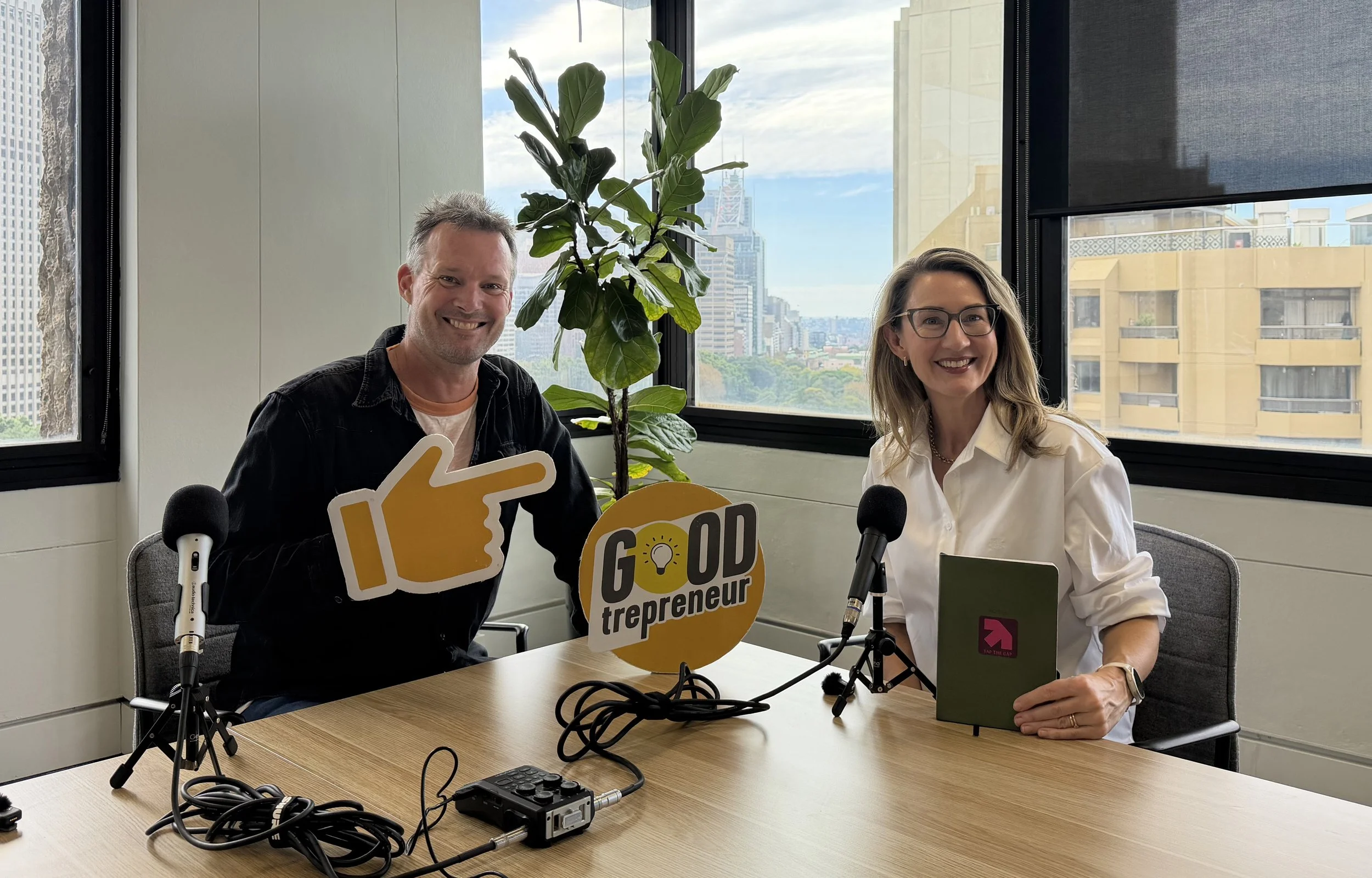
Recording in Sydney, Australia
Full Episode Transcript
Singers 0:00
I'm gonna change this world today. Make those bad things go away.
Ben 0:04
Just quick. So let's start with you like pineapple one pizza or not.
Lucy 0:10
100%. I'm really not Italian by any standards. I love pineapple on Pizza.
Ben 0:16
Money. Nice to have now, even nicer to have in retirement. But for half the population, that's not a sure thing. In Australia, women typically end up with around a quarter less in their retirement fund than men, and that can contribute to everything from homelessness to living on the pension, which isn't exactly the retirement most of us dream of. Tap the Gap is on a mission to do something about it. And founder Lucy Kough is here to tell us how. Welcome, Lucy.
Lucy 0:41
Thank you. Hello, thanks so much for having me. It's a real pleasure to be on this podcast.
Ben 0:45
Oh, fantastic. So look, a quarter less super, that is a significant statistic. And my understanding is it can actually be a lot worse for some demographics. Do you want to tell me about the problem?
Lucy 0:57
So essentially the data tells us that Australian women are eight times more likely to be homeless over the age of 55. Now that's a lot, right? That's not twice as much or three times as that's eight times. So essentially, women who are working in our economy, generally taking up most of their unpaid care and contributing to over 60% of the GDP in the country by caring for people, bringing up children, caring for the elderly, and not getting paid for it, are finding themselves later in life with not enough money in their superannuation. And then they're ending up on the streets. Now, this is not the outcome that we want, right? For half of our society. And it's just not fair. It's not a fair outcome. And the reason for that, we can, you know, we can talk about it and people will go, oh, look, there's nothing we can do about it. The simple reason is that our financial systems, our structures weren't built to reflect the way that women work and live. They reflect a single earning male in continuous employment. So this is the problem. The problem is not so much paychecks or yes, women earn less, yes, women don't get promoted. There's all of that in it. But the fundamental problem that we're dealing with is the infrastructure that we don't have a system that reflects people who work part-time, people who work in lower-paying industries, women that take time off for health reasons. Women are most likely to care for an elderly parent if they need that. So there's all of these times in a women's woman's life that they will come out of the workforce. And our core system that helps people save for retirement doesn't reflect that.
Ben 2:39
The system's literally built for you to have a full-time income, for you to get retirement income.
Lucy 2:44
That's exactly right, because it's a percentage of your earnings.
Ben 2:46
Percentage of your earnings. And even if you're doing like casual work or what's not even considered work often for some people, kids, which is actually exceedingly valuable work, like bringing up the next generation. If there's no money directly attached to that, there's no superannuation being built up either.
Lucy 3:02
Correct. That's true. And to understand the problem a little more deeply, the reason that women are ending up homeless is because often at that time women are separating from their partners for various reasons. A lot of them don't know that superannuation is a shared asset under family law and are walking out of these relationships without the right to shared super, leaving it behind, leaving it on the table. And, you know, you can imagine that is a really stressful time for a lot of women and their partners, of course. But often in those times when we don't have the right information and the right guidance around us, we do make decisions that can have a huge effect for us later down the track. And the key thing to remember, especially for that audience, is the data tells us that in 90% of domestic violence cases, there's been a form of financial abuse. So we see from a behavioral point of view, women who don't have agency over their finances are stuck in these really bad situations. And I've heard stories from super funds telling me about women who've lost all of their super because of a coercive relationship. So what we need to do is look at ways for that system to serve women better.
Ben 4:18
It's a version of control, really, another version of control, isn't it?
Lucy 4:21
It is. And look, uh, and I think when we talk about it from an infrastructure point of view, look, we have to look at what's changed. You know, superannuation was brought in in the 90s, right? And work looked very different back then. You know, the majority of households were male and female together, man at work in a consistent job, woman mostly at home. Now, you know, I'm a big fan. I remember growing up loving Hawkey and Keating and thinking they were amazing politicians. And it's not to that detriment, but the world of work looks very different today than it did, you know, almost 30 years ago, and our systems haven't kept up. Women are a huge proportion of this audience that we're talking about, but we're also considering the self-employed and that gig economy, which is growing by the day. Now, these are people that aren't forced to pay their own superannuation as well. So again, we've got these huge gaps being created, and we need to change this infrastructure and these systems so that we don't have all of these people getting to retirement and really freaking out. They don't have the right advice around them, they're scared, and they're ending up in really dire situations.
Ben 5:29
Yeah, and that combines horribly with like rents have gone up, people can't afford houses. So you end up at the other end of the leg, let's say you do end up, say, um, at 55 divorcing or at 65 and you've done a gig economy your whole life. Yeah. In the next, say, 25 years or whatever that you live, the rents are going to triple and quadruple in that time.
Lucy 5:47
Exactly. And so I think, you know, it is a really, it's a big issue for Australia as a growing one. And a growing one, right? And it's not just about personal finance, it is about the whole economy and actually how we're going to support these people. Because ultimately, if people are more independent with their wealth, that takes a huge strain off the Australian economy. And a lot of the research that we're looking at is about the whole economy is going to benefit from women's participation in it, right? So there's this piece where women are, oh, I'm not going to go back to work after having kids. There's maybe it's not actually financially viable for me. Daycare costs a lot. There's all of this sort of myriad of issues surrounding it. But I say to women, I'm like, you know what? The fact that you're earning super when you go back to work, maybe you're not coming out at the end of the day with huge amounts moving forward, but that money is investing for you. And that's your nest egg that's growing. But we're not taught to think like that.
Lucy’s Family Story And Spark
Ben 6:45
Yeah. Now I'm going to take you back to your childhood.
Lucy 6:48
Yes.
Ben 6:49
Because you first, I mean, you've explained this problem um very much with the now, but you recognise this way back with your own mum. Is this true?
Lucy 6:56
Yeah, yeah. I'll can tell you a story about that actually. So yeah, I grew up in a kind of standard suburb in Sydney, um, thought I had a great upbringing, definitely spent my time climbing trees and, you know, playing games out the front until dusk, which is a wonderful childhood. My mum was a primary school teacher. We had four kids in our family, and she taught me those great values of education that's really important to educate everyone at all levels, really brought up in a creative environment to think about different things and critically analyze things, I guess, from a young age. But where our story took us was that my dad suffered some real mental health challenges, and that put a huge strain on our family, and they ended up separating. And she retired after teaching primary school kids for 48 years with no super of her own. And she had brought up the four kids and moved us out of another house. My sister ended up working for us, stopping E and worked for us full-time to support us while mum was paying a mortgage and rent in another house. And yeah, so I know what that financial instability feels like. And it doesn't feel great. I've had to, you know, I think about that. And I think there should be better outcomes for women. You know, mum is fine and she's great now. And, you know, she's got, we're a really close family because we've come out the other side of that. But I think if I look about the contribution that she's made to society and why should she end up with that feeling, you know, when she's just put so much in. So, you know, I was working my day job in advertising, which feels like a very uh mediocre job compared to teaching primary school kids. But um, and I was working on a super fund and I discovered this statistic about 28% less that women are going to retire with. And I just, I kind of couldn't believe it. Like it felt like such a huge number. And no one really was talking about it at the time. This is about five years ago. You know, the people within the industry were, but no one out there in the world was talking about it. And the more I started to talk to people about it, the more they kind of went, oh yeah, if I think about it and do the math, I earn less generally. Maybe I'm overlooked for a promotion. I take time off to have kids. And they're like, actually, that kind of sucks. And when I talk to people about it, particularly women, it made them angry and rightly so. So, you know, that's where I looked into it and went, we need a really lateral solution to change this. We can't just say, oh, we've got to educate women, because women are like, it's not that we're not educated. Like, that's kind of like, okay, don't talk to me like I'm an idiot. There's a lot of really smart women out there who haven't been taught the basics of superannuation and they're really busy, right? They're trying to manage households, they're trying to be a friend, be a mum, be a bloody hot girl walking down the street on the beach, you know. Yeah, all of that. So there's a lot of pressure on women. And that's where, yeah, I decided to use my creativity and randomly, you know, jump into the world of tech and try and change this for the better.
Ben 10:10
Interesting. So you've seen it, you've actually grown up without realizing it, probably, or without being able to galvanize it in your mind. Yeah. You've seen a stat and gone, oh my God, that was my upbringing. And then you've realized it's actually you. And then, of course, as you say, you start looking around, you go, it's everyone.
Lucy 10:25
It's everyone, right? And it's so many people. So the more people I spoke to, and the key question is, you know, when was the last time you checked your super? And it was kind of this blank face.
Ben 10:36
Who's your super with?
Lucy 10:37
Who's your super with? Correct, exactly. And so then you say to someone, Well, would you not check your bank account for 30 years?
Ben 10:43
It's true. It's we're it's us humans, we're all about the now, aren't we?
Behaviour Change Over Financial Jargon
Lucy 10:46
We're all about the now. And so it's this behavioral lens that Tap the Gap is bringing to the problem, which is when you actually talk to a woman. And this was one of those moments when I was early working on the idea and I met a young woman at a startup event, and I was kind of telling her what I was working on. And she said, Oh, super, I really need to think about that, but I don't feel really confident. And, you know, I'm under 30. And I'm like, great, you've got time. I'm thinking talking to her. And so, you know, we connected on LinkedIn and I said, Oh, there's probably three things you should do under 30 that could really help. I'm not a financial advisor, but this is some things you could talk about. So I messaged them on literally message, you know, a couple of characters here and there. I saw her a month later, just randomly at a startup hub, and she came over and she said to me, you know what? Thank you so much for sending me that information because it gave me the confidence to call up my super fund. I changed my investment choice and I spoke to my dad about my super. And that kind of gave me shivers at the time. And I thought, I've literally just had one conversation with you. I've talked to you about super. I'm not projecting, I'm not selling, I'm not doing anything. I just had a conversation with you, and you've grown your confidence in probably half an hour. Yeah, in that time, right? And so I think that's where when we talk about change, and you'll know this, you know, really well in the world of sustainability, that behavior change, how we change what we do, you have to have confidence in what you're doing in order to do it. And I know that kind of sounds probably straight up, but people, you can see a lot of the super funds and where they're falling down is that they're saying, oh, let's just educate everyone about super. And if we tell them more, they'll understand that it's important and then they'll put their money in and they'll take better care. And that just doesn't work from a psychology point of view because super's not a tangible thing that people are thinking about today. You know, they're worried about paying the bills, they're trying to deal with all the problems in front of them. But when you come in and you tell them a story about inequality and what's going to happen later in life, and that here is an opportunity for you to change that story for yourself because of all these things, that's when they start paying attention. And that's really exciting.
Ben 13:05
It's actually a classic marketing funnel.
Lucy 13:06
It is a marketing funnel. You're right.
Ben 13:08
I need to be aware I have this problem consideration. I need to understand the problem and deep dig deep. Now that I get my problem, I need someone to solve it. So who will what's conversion? Who will I go with? Interesting, isn't it? So they're all starting with education, but nobody's even aware they have a problem.
Lucy 13:24
Yeah. Yeah, that's exactly it. So you what, you know, you're just walking past that from a like from a woman's point of view, they don't really know the stats.
Ben 13:33
No, and they're probably not thinking, as you say, I'm thinking about I've got to get home, do this, this, this, I've got all these meetings, I've got this due. They're not thinking about how rich am I going to be in 20 years, 30 years.
Lucy 13:43
No, and there's a lot of hope, you know, there's some hope vested there. And then there's also a huge sweeping mass of women who are like, oh, that's not really my thing. Like my partner, my husband.
Ben 13:53
Yeah, my husband looks after that. He looks after that.
Lucy 13:56
That's sort of things. I'm not good at money, is just like just get rid of that, I say. Like, because the issue is statistically, you may separate from your partner and you want to be good at money then.
How Tap The Gap Builds Super
Ben 14:08
Well, and also, yes, I agree with that. But also to move on to your to tap the gap, yeah. There's a piece, your product is pretty simple in how it works. There's an element of you don't actually have to be good at money, you just gotta start doing a daily, everyday thing, and the money will be good at you. It'll work out for you.
Lucy 14:26
It'll work out for you.
Ben 14:26
How does it work? Tell me what is it?
Lucy 14:28
Yeah, so essentially what tap the gap does is make this long-term wealth building automatic. So we go to a space where women are already engaged. Again, we're not telling them to care about super. We're going into a space where they do hold economic power, and that's shopping. So women make 80% of purchase decisions globally. So, really, what we do is connect with your everyday banking tech. So there's three parts to the product. The first is Roundup technology, and that uses open banking, which is a government-regulated platform, which essentially gives you uh it gives us uh consent to read your data in your bank statement, and we calculate what to round up to. So the easiest way to explain roundups is I go and buy a coffee, it costs me $4.60. Oh, which? Or yeah, maybe $7.40 now in the city if you're having special milk. So say it costs you, let's go Dream World, it costs $4.50, and then we round up 50 cents to the nearest dollar. So we're taking that, we're measuring each of those roundups on every transaction. Three times a week, we sweep it, we direct debit it from your account, and it goes into your little digital wallet that goes into your super once a month. So yeah, the easiest way to explain Roundups, I'll do it in the short version, is Roundups basically rounds up every transaction you make on your everyday card, um, like a coffee for 450. We round up 50 cents and you sweep that money, the groceries, whatever. It could be your hair product, your hair's looking good today. Um, you know, it's all the product. It's all the product. So yeah, it can be everything from going out to dinner to shopping online, and you can choose whether you round up to $1, $2, or $3. And all of that gets swept automatically into your super.
Ben 16:11
So that's interesting because generally superannuation, as we said at the start, is attached to your income. But what you've done is said not everyone has an income, but everybody has to spend money. So we'll attach to the spending instead. We're going to move where the savings comes from.
Lucy 16:25
Yeah, correct. So that could be you might be on maternity leave, but you can still be part of Tap the Gap. So that's the first way that it works, which is round up, and that's your own money. So to be clear, it's your own money. Sense 10 cents here, 20 cents there, 60 cents, it all kind of adds up. And at the moment, our users are rounding up about $40 a month. You know, some months it's a little bit less. So it's kind of $10 a week, a little bit less, but that can have an astronomic effect on your super. It can't be the magic of compound interest, which is our new best friend. So, you know, that $30, $40 a week can grow to, you know, 50 or 60 grand in your super at 7%, you know, over 30 years, which is not nothing, right? It's not nothing. And right now the data is telling us that women are retiring on average with 50 grand less, you know, than men. There it is right there. Yeah, there it is right there. You can close that gap. So this product can literally close that gap for you. So that's the first way it works. The second way that it works is what we call brand bonus. So this is basically a gift from the retailers that are on our platform when you shop with them. I might go and buy this shirt, say from the iconic, I pay $100 for it, and they are offering a 5% brand bonus. So I pay the full $100 and the $5 get swept into my super. Thank you, Iconic. And what the retailers are loving about this is that it's helping them measure their sustainability outcomes. So they are not only helping acquire a customer, retainable, loyal customer, but they can actually report back to their board. I have helped X amount of women, you know, 100,000 women, a million women, when we get to that, um put X amount into their super and it's going to grow to this. So they're actually having a real tangible effect on the outcomes for um, well, female Australians, but all Australians. Um, we do have men and women and non-binary individuals using our platform right now.
Ben 18:17
I was going to say, am I allowed? Am I allowed?
Lucy 18:19
You are. And actually the great thing about men and um, you know, and partners using Tap the Gap is that our technology lets you put money into a spouse's super. So you Gee, that's interesting. Yeah. So um we use BPay, um, which is highly secure, but we just use a BPAY number and you have a different one for yourself and your spouse. So, you know, we have a couple of men on the platform at the moment who are contributing to their um partner, which is great, right? Because in a couple situation, what a lot of people don't think about is oh, well, we've got a lot of super in one, but not the other. Number one, it's how the woman feels about that is, you know, different. But number two, you've got to make take advantage of those tax benefits. It's not tax effective. Yeah, it's not tax effective. Exactly. And most people don't know that up to $1.9 million, anything you take out of your super is tax-free.
Ben 19:11
Tax-free, yeah. So it's big.
Lucy 19:13
Everyone remember this number today, 1.9 million.
Ben 19:16
That's quite a lot.
Lucy 19:17
You it's quite a lot. And let's hope that everyone gets to that point, which sounds like a huge number. But the earlier that you start contributing these small amounts, it could even be $10 a week, as I talked about, that number is going to grow and snowball. And it's the snowball effect that, you know, we're not really taught about in schools. And we're not teaching our kids as much because we don't know. But that's a lesson you want to teach your children. And that, you know, especially for young women growing up entering the workforce. Yes, you want to buy all the things and you want to go out for um, you know, never-ending mimosa cocktails and all of that, do that, but just chip in a tiny bit because when that money is growing in your super, it's different to stocks, it's different to property. You're not having to pay tax on it. It's tax free later. It's tax-free later.
Ben 20:04
Isn't it ironic that we of all the things we teach in schools, we don't teach people how to be financially independent? We don't.
Lucy 20:12
It is ridiculous. And you can see there was a huge report done by Deloitte and IRS. It was called the Big Lift, and it really talked about our financial capability. And there are trillions of dollars missing from our economy because we are not financially capable. People don't get it. You know, the data was saying essentially if people lifted their capability, um, we could add an extra $130,000 to the every household's gross um wealth.
Ben 20:40
Yeah, I bet. And then some of that goes to tax and we're rich as a society. It seems like such a no-brainer. But if everybody in a society knows how it all works and then has simple tools like this to actually implement it, everybody's actually better off.
Lucy 20:54
Yeah, that's it.
Ben 20:55
Better for me, better for we.
Lucy 20:57
That's it. And, you know, I think the that information, which you just touched on there, knowing and understanding, that's been one of the real barriers as well. Because have you ever read through a letter from your superannuation fund?
Ben 21:13
I I do make myself, but I wouldn't say it's the thing that I look forward to the most.
Lucy 21:18
Yeah, exactly. And look, there's there's reasons for that, right? It's a highly regulated, highly compliant industry, and it needs to be because this is people's. There's a lot of money. There's a lot of money in there, there's billions of dollars in there, and it's really important money. You know, we had the Royal Commission years ago about investment firms and financial advisors that weren't doing the right things by their clients. So I respect that and know that there has to be rules and regulations in there. And that's why we have our AFSL. We went through the process of getting that last year, and we take that really seriously because we are bringing general advice to people and we are helping move money into their superannuation fund. But the education part of it is really important, and that's why within Our app, we have micro learning. Is this the third part of the product?
Ben 22:03
I was gonna say we only got up to three.
Lucy 22:05
Great segue. Um, so the third part of the product, yeah, is micro learning. And we call it micro learning because who's got attention span and more than 30 seconds?
Ben 22:13
So it's one 30 seconds is a long time. It's a lot.
Lucy 22:16
Okay. Well, I'm thinking back to um you're right, most people are about three seconds, but you can go in there and they're one to two minute pieces of content and simple slides that explain the concepts of super in a way that people can understand because people just don't. It's really boring.
Ben 22:33
It's interesting though. I engage first. Yep. I then get rewarded. And now that I'm like kind of involved in this, then I start to learn, which is very different to how most things go, which is let me teach you everything first. Correct. When I'm when you're not interested, not paying attention. So it's a nice flip on how most things work.
Lucy 22:49
Yeah, it's a real flip on the customer experience. And that's where I think the behavioral shift is so exciting, right? Because we're seeing that that confidence grows through action. And we've had that validated through a lot of the CEOs in the super funds we're talking to, and saying, what really shifts the dial for members? And they've come back to me and said, action. When a member actually takes action for their super, they're they've got this deeper engagement. It's not about how many emails we send them or generally how many ads we put on TV. All of that is part of the infrastructure. And I understand that. But the action and our action is we're showing you the money that's coming in. So within our app format, you know, you get your Roundup total, you get your brand voters total, and we show that a beautiful future projection of what that might look like. And it's that's good.
Ben 23:37
So you're sending me the later dream, but in very now tangible. Yeah, correct.
Lucy 23:42
And through all our user research, that's what our users are saying. I want to feel a sense of progress. So it's not that you have to be great at maths or great at finance, like you said before. You can connect once. Once you've done it once, you can sit back and let that kind of roll through. You don't have to tend to it a lot, if that makes sense.
Ben 24:00
But that's a beautiful way. So it's almost gamification. You see it in a lot of apps now. And you know, I always remember the start of apps and internet. Everyone's like, and it does this and this and this. And people put out this does everything. And what they realize slowly is no, you're better at putting out something that gives people one simple thing to do, and then one next simple thing to do, and then one next. So the and then that's the classic, you're you know, 62% of the way there to the perfect profile, you know what I mean? Yes. Now do this today, now do this. So you lead them on a nice slow path.
Lucy 24:28
That's right.
Ben 24:29
And if they never get past step one, kind of doesn't matter.
Trust, Regulation, And Open Banking
Lucy 24:32
It kind of doesn't matter. And you're right, like there's only so much cognitive load that a user can take on board, especially in an app experience. And look, I'll admit that getting people to connect to Roundups, it has been a big thing because a lot of people aren't familiar with open banking technology. I wasn't when I started this.
Ben 24:49
Do I need to even know that though? I as a as a user, I just need to know that if I sign up there, when I tap there, that money goes there.
Lucy 24:57
Yes, that's true. But in order to onboard, you have to understand what you're doing. And we are asking you to connect and give consent to us. And that's what we worked really hard on when we were building the app to help users get past that point and to build trust with users in that situation. Because anytime you're connecting, everyone's so scared of fraud and data and scams that we need to be open with them and talk to them about it. And actually, our values are about educating. And I want our users to understand that they're using the latest and greatest banking technology to have agency over their finances. They don't need to understand it all, but they need to know what they're using. Yeah, they need to trust it.
Ben 25:37
So what we um through that you actually only launched in December 2025.
Lucy 25:42
This is true, yes.
Ben 25:43
So I guess I have two questions. Yes. Number one, how's it going? But also just expanding on what we just talked about. What are you finding is working to get people in and to get using it? Because it's one thing to create, see a problem, create an idea. Getting people to use it is really kind of the next important big thing. We would have thought, right?
Lucy 26:01
Um, and look, you know, my journey to being a startup founder is I didn't know anything about tech two years ago. I mean, apart from how to use my phone and the TV remote. And obviously came from a creative world where I'd written websites and, you know, we produce some products, but I didn't know how to build it myself. So I studied no code, I built a really dodgy version of the app. And through that, and I say dodgy now because I thought it was beautiful, but now I can tell that it was really dodgy.
Ben 26:29
If you're not embarrassed by your first version, exactly.
Lucy 26:32
You're not launching early now. I'm really embarrassed. I I did a post early at the start of this year, kind of putting them side by side so I could show that you know the progress. So essentially it's a long journey. We launched just in December last year, and that was after the whole year of building and getting regular. Yeah, took a year. Building, testing, testing, getting like the biggest piece was our AFSL license, which took way longer than we thought. So our tech was ready to go, but we couldn't go to market.
Ben 26:58
Do you test with users along the way and go try this? Does it work? Does it work? All the way. Yeah.
Lucy 27:02
All the way. And even prior to doing that, I was talking to heads of P and C at employers because we wanted to validate um and P and C people and culture. People and culture for the listeners at home. Yeah, for the listeners at home. So really we saw when we when we came up with this idea, you know, to start with, women loved it, right? They were like, oh my gosh, this feels amazing. If I could just do that and do it and not really think about it, thank you. I'm signing up today. But not all of them wanted to pay for it. So what we went and talked to heads of people and culture for about six months to say, where are you at in terms of financial literacy for your people? And what we found was it was the next frontier of wellness. So, you know, great companies, employers of choice were offering great physical benefits, great mental health benefits, but they recognize, like you said, our financial literacy as a nation is going backwards. People are stressed about money. And when people are stressed about money, they're stressed about everything. So number one reason relationships break up. Correct, correct. So they're recognizing that that's something they could combine into their EAP or into their financial well-being benefit program. And so we really talked to them very deeply and started co-building that product with them. You know, one of our early employers really was the first person to say to me, you can't just give it to women. We have to be able to offer it to everyone. And I loved hearing that feedback and said, actually, you're right, you can't block men and non-binary individuals out of this. They have to be part of the solution. And that's where we worked and we built the technical capability to put money in a spouse's super. Or if a man wants to use it for himself, why not? So be it. But really, we're coming in through that avenue of actually educating women and men about this problem so they can solve it together. And I found it really interesting, young men in some of the employers that we've gone into, they love the module of education we do on super and separation. They're like, oh, what do you mean? Like, I've got to share my super, you know? And so it's not about my super, it's our super. And making them aware of that is has just been phenomenal because they're rethinking about their relationship with their partner. And do you know what I mean?
Ben 29:19
So I imagine that would be for some people in impetus to see, oh, look, you've got no super. What about this? So you start building some too. Now together we have more super.
Employers, Retailers, And Scaling Impact
Lucy 29:28
Correct. And going back to that point, like if you're having equal financial discussions in a relationship, then that makes for a stronger relationship. You know, we're seeing data now that a lot of women are putting into their prenups that they want their partner to split super through childbearing years. I'm like, full power to you, sister. Like, you know, that women are wising up, younger women are wising up to this. So, you know, to get back to what you talked about, what's working, is that where our go-to-market is really working through those employers, because we talked about trust, right? And uh ASIC data shows us that employers are a real trusted source of financial education for Australians. They really are the number one influence, not the TikToker and you know, all those people out there. So the employers are delivering this education. And I'm finding with those, we're getting a higher uptake of users to complete the onboarding.
Ben 30:23
So really, so basically they're doing your go-to-market for you, they're going, cool. We would like all our employees to be uh financially literate and have a good retirement at one point when they leave. So we're gonna educate them on, hey, did you know there's a problem? And then we're gonna offer them this app as part of that, I guess free use of this app, which otherwise, if I just came in via the website, there's a I have to pay something. Yeah, that's very interesting. So they're seeing it as a good um health and well-being is kind of financial well-being add-on benefit for their employees.
Lucy 30:54
Yeah, and then for them from a sustainability reporting point of view, it's important, right?
Ben 30:58
And so they look after people.
Lucy 31:00
Correct. So it's got that real. So there's sort of, I guess the business to explain it has this kind of flywheel effect where we've got the users who are the women and men and non-binary individuals who want to grow their wealth. We've got employers who are helping deliver that to them. We've got the super funds who stand to gain, who want more money in their funds, and also want to engage audiences earlier.
Ben 31:21
Yep.
Lucy 31:21
That's what we're finding. There's been huge amounts running through the press lately talking about the mass exodus of traditional funds because funds are really struggling to deliver advice at scale. And so that's part of our plan is to really um not so much personalize the advice because we are general advice um under our AFSL, but make sure that we're sequentially delivering that advice at a meaningful time to those.
Ben 31:50
More palatable way, right? Where someone is the TV and the brochure.
Lucy 31:53
Yeah, exactly. Exactly. So we've got those employers and then we've got the retailers who, again, as we've said, that's that fourth party. They really want to be connecting with, you know, their big audience, which is women who are shopping there all the time and talk about something meaningful with them because loyalty programs are really all same same at the moment.
Ben 32:13
Yeah, and they get a little bit opaque. I'm not sure how much is a point worth.
Lucy 32:17
Correct.
Ben 32:18
And you can change at any time, but my points are worth.
Lucy 32:21
Well, that's it. I mean, the RBA has just delivered news that it is cutting those exchange fees in October of this year. And the implication for that is that the fees that they normally take for that credit card is actually what's funding the value of those points. So that infrastructure is about to take a real hit.
Ben 32:39
So they're going, okay, if I want loyalty, okay, if you're trying to build your super via when you spend, if you spend with us, we give you that 5% loading on your purchase fundamentally.
Lucy 32:49
Correct, correct. So really that, you know.
Ben 32:51
It's like a cashback, really. It's we stick it in your super instead of give it to you.
Lucy 32:55
Correct. And so it is, we think about it, it's not just five bucks, you know, it's what five bucks.
Speaker 1 33:00
It's five bucks down the track.
Lucy 33:03
And that's different. But again, the language in the way that we talk about that is different. Um, and we've really heard from the retailers, no, they don't like the words cashback. It feels cheap. So this is the marketing brain coming in and going, how can we make that for, you know, everything about the experience that we've designed at Tap the Gap is to suit all of those parties, you know, to help the women understand things, to make sure we're reflecting value for the retailer, to support the employer in what they want to achieve and making sure the super fund has that engagement.
Ben 33:32
Did you plan all this out on paper at the start? Or did you start with, I've got an idea about the roundup? And then slowly when you spoke to people, you went, Oh, I've got a here's an opportunity, here's a challenge, and you've figured it all out as you went.
Lucy 33:43
Yeah, good question. So it did start, it did kind of change slightly because I started with the brand bonus part of it, which was the retailer part. So you built only. Yep. Well, that's in my head before we actually.
Ben 33:54
The actual roundup wasn't there.
Lucy 33:55
No, the roundup wasn't there.
Ben 33:57
So it started as actually a loyalty program.
Lucy 33:59
But the reason, yeah, it started as loyalty. Yeah. And the reason that the loyalty then we switched is because through user research and testing, we know that in building these experiences, you want to see that progress and you want to see it quickly. And when we did all the calculations, you know, cashback and wasn't going to add up to wasn't going to add up to as much, right? You had to really be pushing a lot of that through to do it. And actually the technology at the time didn't really support that. So we waited a bit longer and we're now using a slightly different tech, which is called Card Linked Rewards, where it does it all in the background. You don't need coupons, you don't need codes.
Ben 34:35
No, as soon as there's coupons and codes, you're just tapping out, right?
Lucy 34:39
So so now we've got that, but we we started with the roundup and actually we just sort of surveyed our recent users and we wanted to know did they come full roundup? Did they come for brand bonus? Did they come for learning? A lot more than I thought came for the roundup because they can see seems like the simplest, most obvious. It's the simplest, most obvious. But again, we I can think and feel things. I need the data to tell me what's really happening. So yeah, that's the one where you can see that sense of progress straight away. And that feels really good for a user, right? And think about an app, you know, people don't hold on to apps, they never come back to them. You've got to build that stickiness in. And the brand bonus is kind of that sugar on top. One of the other things we wanted to be really conscious of was not encouraging women to shop more. And I did get some of those questions from early investors and saying, oh, this kind of has got a weird vibe to it. And I said, well, it's about the way you talk about that. And the reason that we built the features in that order was so that we're like, okay, this is your money. And the retailer thing is on the back of that, right? It's a nice to have. And again, the roundup is sustainable in the way that we're not encouraging you to shop more. If you're someone who makes 200 transactions in a week, you're going to round up based on that. If you're someone who, you know, earns less and maybe spends less, you're going to round up based on that. So it's about rewarding you for the spend that you're already doing.
Ben 36:04
Yeah, yeah. Don't spend more.
Lucy 36:06
So we're very different to a traditional rewards program. Who is the more you spend, the more you save.
Ben 36:12
Like ironic spending. It's ironic.
Lucy 36:15
And so I think that's it. So when we say you're going to build wealth while you shop, it is a different way to build wealth. And we've been really conscious of that through our narrative.
Ben 36:26
I actually had a thought once. You know, when you're sitting there and you're looking at something on your phone, you go, I want to buy it, I know I shouldn't. I want to buy it, I know I shouldn't. I've actually thought, you know what I need to do? Let's say it's 50 bucks. I'm going to not buy that and I'll put 50 bucks in my super. So actually give myself a diversion from the impulse purchase.
Speaker 1 36:46
I love that.
Ben 36:47
Now instead of because just not spending it doesn't come up with a great feel. The idea that all right, I now did spend that money on something better, something that I have for the future. That's just a little idea I had once for myself to bring in my own bad behavior, occasional, I'm not a great job, but so that is definitely a feature.
Lucy 37:07
Well, an impulse job, and I look, I love that. Um, that might be something we'll put in our backpack to look at it. Um but I do think there are, you know, there's little features like that, that topping up or wanting to put something in at the end of a piece. You know, I had a a user who we did user research with, and she had shared that she made a goal for herself that every time she shopped and bought something, she put the same amount into a savings fund. Right. Yeah. And it actually changed her behavior in that moment because it made her think really hard, do I really need this?
Ben 37:36
Yeah, and it's costing twice the price.
Lucy 37:37
And it's costing twice the price. I mean, then she was funny and laughed about it um afterwards saying, Oh, it really helped me save up, you know, for my sauna. And I'm like, okay.
Ben 37:46
Yeah, but now you've got to put the whole sauna's worth in.
Lucy 37:49
Yeah, that's true. I think she, I think we cut the pattern by then. So look, again, that talks about behavior, right? And it's different from going, oh, it's just a feature in a fintech app. So what we want to do, and obviously we're in market for four months, and you know, this is where we're just starting, but there's a huge amount that we can do in terms of understanding that behavior that consumers are going through as they're shopping, making purchase decisions, and then being able to communicate with them in a meaningful way.
Ben 38:18
Such a fascinating space because we all know impulse shopping, and now we got, you know, one click. It used to be I had to go to the bank and get money out, then I could go to an ADM. Now then I could just tap it. Now I can just sit in my phone and double click the side of it. It just gets easier and easier and easier to spend money. And the psychology around this is just fascinating. The fact that you're trying to essentially insert the concept of super, and why don't you think about your future and use these psychologies? I just think it's awesome. Have you found with your uptake that there's a certain demographic that just goes for it way more than others, or is it just scattered?
Lucy 38:51
Yeah, that's a really good question. So traditionally, and I know from working in the super industry, like working on a super client, you'll get women late 30s to 40s who are more engaged in the super. They've woken up to the problem. They've woken up to the problem. They might have a few kids, or they've, you know, they've moved, they're in a more serious job, they're trying to think about their finances a bit more, what stage they're at. So there's real milestones in life that you know trigger conversations about super. When I turn 40, when I turn 50, these are. Taking maternity leave, is it? Taking maternity leave, exactly. But what's been really encouraging in some of these early employers is that we're seeing women who are 19, 21, really, 24, 26, signing up and going, This is awesome. Like had a young girl come and say, Thank you so much for talking to me about this. I'm going to tell all my cousins. And I'm like, I love that. I've got a lot of cousins as well. But, you know, and another girl who said, Oh, look, I just had no idea that this is how it worked. And I need to go and talk to my family about this. So it's this realization, and I'm very well aware that. So that's what's exciting. So the traditional path of people engaging their super is later, right?
Ben 40:05
Yeah, and that you're talking 10 to 20 years later. Yeah.
Lucy 40:07
That's 10 to 20 years of compound.
Ben 40:09
Compound interest. Yeah.
Lucy 40:10
I love that you say that. I love this. It's great. Um let's say it again. Yeah, compound interest. It's just so sexy.
Ben 40:16
It was not it was somewhat called one of the the most powerful force in the universe, didn't they?
Lucy 40:21
Pretty much, pretty much, right? And you know, I think we need that on a t-shirt. But yeah, so what's exciting is I think because we're coming in that other avenue, which is about inequality, it is about independence for women. And they can see that, and this is a pathway for them. So that's what really excites me because if we can change that general age that someone connects with their super, if you understand super, you understand wealth.
Ben 40:48
You'll understand money.
Lucy 40:49
And you understand investing, right? So if you through the gap, by educating women and getting them to engage with super, we're teaching them how to invest. Really.
Ben 41:00
But there's a step back there. It's actually to what you say, if you wait till people are 30 or 40, that's when you're educating them on super when they've gotten interested. When you're talking to 19-year-olds, people hitting their first job, this is a big change point for them. And you're actually talking about equality and fairness and whether they are gonna have the same career path and the same opportunities, you're talking about a very different thing. Independence, independence, fairness, equality, those things. Those are far more powerful and motive things to start with, and then go, well, that one of the number one places that you're gonna lose your independence and lose your equality is around money. So I know it's boring at this point, but let's talk about one simple thing you sign right now that will give you that independence and fairness for the rest of your life. That is a very powerful move to shift people back 10 to 20 years and enter in on an emotive issue rather than let me talk to you about money.
Lucy 41:51
Exactly. And that's what is yeah, that's just what is wildly exciting. That's what gets me through the long hours that is running a startup, which is way harder than I thought it would be.
Ben 42:03
Tell me about it. Oh that's actually my next question. Okay. It's a there's a couple of them, but I'll go with the one that goes. What's the most unglamorous thing about running a startup?
Lucy 42:12
It's a bit of a bummer question, but look, I think I think there's a lot of gloss out there on Instagram, and you know, I'm running a startup and it's all just fabulous, which it is in the sense that it brings me great joy every day, and I love the energy of it. The most unglamorous thing about a startup is doing all of the jobs. So you're doing, you know, the finances and you've got people to help you with things, but at the end of the day, you're doing numbers, you're worried about security, you're um looking at marketing, sales funnels, you're learning all of these new tools that you're having to do. And probably the hardest thing is knowing that it ends with you. Like if you don't have someone on the payroll to be doing that job, you just gotta learn it.
Ben 42:58
You're doing it.
Lucy 42:58
You're doing it.
Ben 42:59
Yeah.
Lucy 43:00
There's greatness in that. And there's I love learning, like I've always been a learner. I do love that about it. But there's some weeks where I'm like, wow, I would love to be doing something that I actually don't have to learn right now, you know, especially when you come from a career at the time when I moved out of my career, where I was sort of at the top of my career and was really confident going to this learning curve where I had to learn a lot really quickly. And I'd probably say there's 20% of my job right now, which is my old skill set.
Ben 43:30
80% of your skill set is now new.
Lucy 43:32
Yeah, yeah.
Ben 43:34
You better want to do it, eh?
Lucy 43:35
Yeah, yeah, that's right.
Ben 43:36
Um, that must take a lot of time too.
Lucy 43:38
It does. So that unglamorous side is probably the hours. Like I do work a huge amount of hours.
Ben 43:44
I do know you emailed me at 8 a.m. on a Sunday last week. Loser alert. And an equal loser. I actually received it at about 8 05. Yeah, yeah.
Lucy 43:52
I look, I think for me, I'm going, I'm in that state at the moment where I go when I think about it, if I send it, you know, I do schedule send some. of the time but sometimes you can get people in those windows and yeah I like to try and get back to everyone and yeah it's a lot but I love the flexibility of I was gonna say what's the glamorous bit come on it's got to be a glamour the glamorous bit is uh for me it's just meeting people you know like I just am getting to meet people from all walks of life whether that's users whether that's potential investors I'm talking to retail partners and just really interesting women in the space of equality for women. I've had so many people reach out to me offering to help what can I do to help and support you who can I introduce you to and that's that energy is phenomenal and I love that I love that sense of community because that's what women are good at, right? Like that is something that separates female founders I think from the rest of the pack and we have to lean into that and you know our strength is building community and connecting with people emotionally. So yeah for me that's the most glamorous part I feel like going to an event or just going to have a coffee with someone new is yeah I'm really grateful for that because that brings richness to my world.
Ben 45:11
I like I mean um having worked in sustainability purpose impact caller what on the earth you will for about over 20 years now I've I've found that too uh number one I've it's a very female space I must agree with you like there's got to be 70 to 80% females in the do let's help make the world better um sort of industry if you like but also found to your point the galvanizing power of a mission or a cause yeah like if you're just sitting sound to someone to go how are we going to make some money? It's all right but it's you know it's transactional when you're sitting around to talk about a cause the various um you know root causes of that what are the new methods in what's worked what hasn't it excites people yeah it is it's it's balm for the soul and you know I you know I think that there's that whole thing Dan Pink of you know people want mastery um purpose mastery and autonomy. Yes I want to do something I believe in I want to be able to get good at and I want to be able to give in the chance to learn and pioneer it myself and I think there's so much in that for people that's lost and to me I agree it's that is the thing that fundamentally gets you back up every day because it is hard right changing the world for the better is hard.
Lucy 46:20
Man it's hard yeah it is really hard yeah you know and there are I would say there's only been really a handful of days where I've thought oh I can't do this but I I've kind of taught myself to think that's not going to serve you and it's not going to serve the people you're trying to help for you to doubt yourself, you know, and to sit in that too long. I think there's days where you can go this is really hard and challenging and I don't know the thing but the kind of I can't do this. I'm gonna give up I have to look behind me and go, well look what I've done already. And that that is the thing that keeps me moving forward you know and I've had to do that you know maybe in the last week or so going oh wow we're moving at this pace and we're getting more people around us and different types of investment and you know I'm doing all the jobs. But when I get an email back from a user who says oh my gosh thank you so much and they've talked to me about the fact that they're really struggling and they're concerned about their super and you know like I'm getting kind of part of their life story on an email and they're like thank you for doing this that fills me with hope, right? I just need to take that bottle that and amplify it at scale because yeah can we we can bring that humanity to a technical experience and that's where we can create change.
Ben 47:37
Joe I have the same experience running this podcast is maybe once a month someone either rings me or sends me an email saying I I really like this please keep going. And it's one a month keeps me going for the next month.
Lucy 47:49
Yeah that does it does keep me going and I think yeah I think just hearing validation from employers who are saying this is really important from other people out there in the world I know the reality is you can have a great idea but bringing it to life is the challenge, right? And the execution is the hardest part of it.
Ben 48:08
You're not really sure if you've got a great idea until you've tried to execute it.
Lucy 48:13
That's correct that's true. And will people pay for it and what's going to happen next but I think look all you can do is show up as yourself authentically own what you know own what you don't know and try and get the best people around you. That's one of the things that I think I really value is authentic people who do have their heart in the right place, do share the same values with you. And yeah ultimately I want this company to be a huge commercial success because if it is, we can keep going. You know, if it's not a success, then we stop in our mission. So it's absolutely imperative that this is a commercial venture that is going to make money for my investors and that is going to operate in a really positive capacity. Otherwise it's not a charity like this is a business I want it to succeed in the way and that's what we're shaping it to do to be a financially a success story.
Ben 49:06
I don't find that in any way controversial. I'm in the Mark Kramer school of thought that if you can I wish the world didn't work like this but it does if you can generate income out of doing good it gives you fuel to do more good. And I I really like that that shortcut is profit fuels purpose people have said having said that some people are uncomfortable with that. Hang on a second you shouldn't really be making money out of doing good which I I think is the old way but what is your response when you get those sort of people say things like that.
Lucy 49:34
That's a that's interesting I I I can understand why people say you shouldn't be making money out of doing good things. But the reality is that when you are making money you can continue to do that good. You've just said it yourself. So I think when you get in it for the right reasons and there's upside to that, then great. I think people shouldn't shy away from that like I'm open about wanting to be financially successful. I actually want to make money so I can go and help more female founders run their businesses or have greater impact with the money I've got and affect decisions in the world. It all comes back to like money does create power in the world. We can't be naive about that. So I want it to allow women to create that power for themselves in the way that they control their own finances and the way that they grow wealth. And you know if you look at all the data out there, like it's really hard to run a social enterprise that is making money, you know, in the world out there it is really challenging. So part of what we're doing at Tap the Gap is knowing that our mission is never going to change. But yeah, making money is the part of it that proves that you're really good at what you do.
Ben 50:48
It's also the fuel. Yeah. It's a I think it's such a it's just such an important question because if you're not prepared to make money you don't have as much fuel as as other ventures which means you cannot be successful as successful as the one that isn't doing good. And that to me leads me naturally down the path. So if I can't make money doing good, does that mean I have to do bad to make money and that doesn't seem like the world I want to live in.
Lucy 51:10
That's that's exactly right. I love that framing actually yeah like I'd love a world that worked in that way and there's so much dirty money out there right like and there's so much money being made especially in tech that yeah sure it's making heaps of money but isn't really having an impact you know it's not is it making the world better is it making the world better over just for a couple of billionaires. Is it making the world better or is it just making more money for the people who have money already you know like I'd love to come out of tap the gap by saying here's this company I've made a huge amount of money in this company and at the same time I've helped millions of Australian women make money for themselves and that's that what they've done.
Ben 51:50
Sounds like a pretty good story to me.
Quick Fire And How To Join
Lucy 51:52
Yeah that will be my story. Hopefully I can come back in several years' time and um I'm looking yeah close close the end of that book.
Ben 51:59
Now I'm gonna give you a few quick fire because you've got investors to talk to you've got customers to work with I can't have you all day as much as I love to um so what's one thing people are surprised to learn about you um people be surprised to learn about me probably that I used to be really good at maths.
Lucy 52:23
Great I used to be really good at math. So great at maths to advertising creative yeah tech entrepreneur tech entrevist right now people would go okay you know are you getting that on the numbers probably because I enjoy creativity more than you know a spreadsheet but I think the maths the love of maths is that problem solving mentality that comes through and I love solving a problem. So that's where the kind of maths and creativity came together and I do love structure around things even though I'm not the world's most organized individual but the structure yeah there's parts of it. So and I've got better at my maths I mean my CFO might have another opinion but that's what they're there for. Exactly but look I've had to learn a whole new set of financial skills right and you know I've worked through with my CFO and understand that business model because in the end it stops with me. I've got to understand every aspect of the company which I do now and the reason that I learnt no code was to have the confidence not to build the tech myself but be able to ask the hard questions and make sure that no one was taking advantage of me from a build point of view. And so that confidence knowing that skill I learn a skill so that I can be confident to ask the right questions.
Speaker 1 53:45
Yeah.
Lucy 53:45
Knowing that I don't necessarily have to execute that skill every day but the person I hire to do that and the way that has an implication in the business I understand.
Ben 53:55
Very good. So it's just it's back to being a CEO you got to know a little bit about everything. A little bit about everything so you can hire people who know a lot more about everything. Correct the doers yeah the work of these powerful skill that you think you bring to the table as an entrepreneur I think my most powerful skill as an entrepreneur is the ability to see the human experience.
Lucy 54:23
And that's through talking to people, getting to know people and understand what they're going through. And that sounds quite strange when we're talking about tech but all tech comes from a human. And I think that's one of the key skills that I've learned in terms of software development is how to really listen and not be blinded by your own bias and look at the data and listen to the people that are using it and make decisions based on that very good.
Ben 54:51
Now if I was to offer you a single use magic wand so you only get one wish with it which of course you would say there's no way I'm taking single use thing. No but let's say it was recyclable or rechargeable. I've got a rechargeable magic use one and I let you use it. Yeah what would you use it for? What would you change in the world?
Lucy 55:09
Sounds controversial but I would take away mobile phones. Wow I I I'm almost with I'd take away social media I don't think I take away mobile phones like it's I I want the maps and I want my phone you know what that's probably a thing I think I would take I would I would take away social media I think and look a lot of people say that but I've got two teenage girls in my house and me too I just you know I talked about my childhood where you know I climbed trees and we rode bikes and you know we're in the park until sundown and my kids do that to an extent.
Ben 55:46
Yeah there's e-bikes that do 60k an hour.
Lucy 55:48
Yeah there's no e-bikes in our house to meet my husband but yeah I just think the creativity and this is the challenge for the next frontier of workers is that with AI, your core skills will be creativity and your ability to critically analyze information and make decisions on that right in terms of is this right? Yes the AI can do it for me but I have to problem solve I have to know what to ask it. I have to know how to have a problem I need to solve. Yeah so I just feel like our next generation of kids they're missing that they don't have this sense of wonderment.
Ben 56:23
Interesting the thing I've noticed with my daughters on that is like I mean I'm just as bad quite frankly but I've noticed literally they crave time they'll fight you on screen you know access and if you try to set up you know they can only have this much but when you go away and there's no reception you watch their nervous systems calm down you watch them go that was a really good week it's it's almost like it's like exercise right yeah you know you're gonna feel good afterwards you still don't do it and then afterwards you're like I'm so glad I did it but it's um that's exactly right.
Lucy 56:56
So yeah I think with my magic wand I would I would take that away or maybe I go I just take it away have you seen Ready Player One the movie?
Ben 57:04
It's a great movie. No I haven't it's about it's more about the you know everyone lives in a virtual reality world most of their lives because the planet's terrible yeah but it's funny when it it they I don't want to ruin it because it's a really good movie but eventually it ends up in there's forced days off.
Speaker 1 57:18
Okay.
Ben 57:19
Which is very unpopular but everyone recognizes that it's better for them.
Lucy 57:23
Okay, okay I see that well yeah and look maybe we take it away for a certain amount of time but I just yeah I feel like that human communication is missing you know that the way that kids communicate with each other and learn about themselves and learn how to make friends is is different.
Ben 57:41
Maybe it's a bit of both because I'm also impressed by how they use the tech sometimes like my daughter's just like blah blah blah quick message they almost took like video walkie-talkies so they're always in context. So they have this beautiful connection but if it's all that I agree you've lost that yeah it's just like how do you how do you same even social media you know like the fact that I can stay connected with people who I will see once every five years is really good. It is really but there's me sitting there doom scrolling is really bad. It's like how do I get the good and not the bad yeah it is tricky.
Lucy 58:11
It is tricky.
Ben 58:11
So yeah that would probably be one of those things creativity and connection that's another t-shirt okay I'll come back to you on that okay the world needs more people like you doing more things like this somebody who listens in and goes I want to be like Lucy where do they begin what do they do?
Lucy 58:28
Oh great so start and you know write write down your idea what you're thinking of and then just start talking to people. When it starts with the beginning starts with the beginning get creative and start connecting start connecting that's exactly right and I think if you've got an idea the biggest thing about it is find out everything around that topic. So don't tell people about your idea go out and talk to them around that topic and what their biggest challenges are, what they've noticed. Tell me about the last time you tried to put money in your super what happened like or tell me about your earliest memory of money is where I started my conversations and it grew from there. So one of the biggest learnings I had reading someone recommended I read the Mum testan book but it's how to create a great customer interview and it's called the Mom M O M. But the Mum test in terms of you've went to your mom and said Mom I've got this great idea blah blah blah she goes that's great time. Yeah you know of course you will because she's your mum so this is how to ask those questions where you're not getting a bias opinion from someone that likes you and you could talk to your friends but don't tell them what your idea is.
Ben 59:40
Don't ask them about their problem.
Lucy 59:42
Ask them about their problem keep your idea inside and then you work around it from that.
Ben 59:47
Good advice thank you very much. So yeah well thank you for spending time with us that was wonderful.
Lucy 59:52
Thanks so much for having me.
Ben 59:54
If somebody is 19 or 30 or 40 or 55 male female non-binary whoever they are and they want more super and start to engage learn about this and get some um nice little bonuses from their favorite brands yes they go to tapthecap.com.au and you can download our web app.
Lucy 1:00:13
So yeah jump on in and there's a free trial of Roundups and um you can connect to brand bonus for free and all the education is free as well.
Ben 1:00:22
Great. And if I want to follow you on my favorite social media channel so that I learn something useful out of social media instead of just looking at inane cat videos you can go to find me, look for me, Lucy Q on LinkedIn. Could you spell that for us?
Lucy 1:00:38
It is L-U-C-Y-K-O-U-G-H look me up on LinkedIn or at Instagram we are tap dot the gap that's our handle. So yeah look us up and yeah any questions things you want to say jump on in try it we'd love to hear from all of our users and potential users. And if you're an employer who is really keen to bring financial literacy to your people come and chat to us got all of that ready to go. And if you are potentially someone who's looking to invest in an impact based startup like ourselves yeah we'd love to hear from you as well.
Ben 1:01:13
Fantastic.
Lucy 1:01:14
Great okay I look forward to hearing about all your future success thank you thank you for having
Ben
my pleasure
Singers
I'm gonna change this world today make those bad things go away
